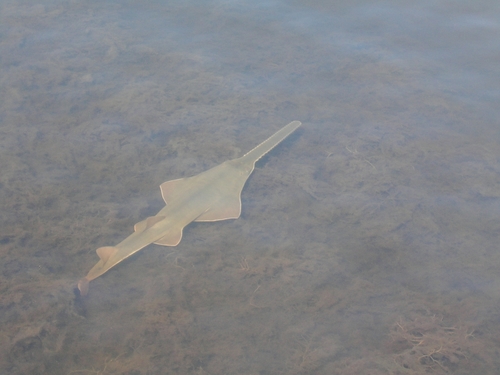
Smalltooth Sawfish
Pristis pectinata
A prehistoric wonder of the shallows, the Smalltooth Sawfish is easily recognized by its incredible tooth-lined rostrum. Once common along the Atlantic coast, this rare ray is now a prized sight for coastal observers and conservationists alike.
Quick Identification
Size
Typically 10–15 feet (3–4.5 meters) long, with large adults reaching 17 feet (5.2 meters); weight can exceed 700 lbs (320 kg).
Colors
Dorsal side is olive, brownish-gray, or pale brown; ventral side (underside) is white or cream-colored.
Key Features
- Elongated, flat rostrum (saw) with 24-32 teeth on each side
- Shark-like body with two large dorsal fins
- Flattened head with gill slits on the underside
- Tail fin with a small lower lobe compared to sharks
When You’ll See Them
Behavior
The Smalltooth Sawfish is a specialized ray that spends much of its life near the muddy or sandy bottom of shallow coastal waters. Despite its formidable appearance, it is a non-aggressive species that uses its saw-like rostrum as both a hunting tool and a sensory organ. The rostrum is covered in electroreceptors that allow the sawfish to detect the faint electric fields of prey hiding in murky water, making them highly effective hunters even in low visibility.
When hunting, the sawfish utilizes a side-to-side thrashing motion to stun or impale small schooling fish, or to disturb the seabed to find hidden crustaceans. They are generally solitary animals but are often found in high concentrations within 'nursery' areas, such as mangrove-fringed estuaries, where juveniles can stay safe from larger predators like bull sharks. As they mature, they move into deeper, saltier waters, though they remain tied to the coastal shelf.
EverydayEarth exclusive
Camera Tips
Capturing a Smalltooth Sawfish on camera is an extraordinary feat that is usually only possible for those with waterfront properties or docks in South Florida. To capture these bottom-dwellers, you will need an underwater camera setup, such as a GoPro with a long-duration battery housing or a specialized underwater trail camera. Mount the camera to a dock piling or a weighted tripod about 12 to 18 inches above the seabed, angling it slightly upward to ensure the silhouette of the rostrum is visible as they glide past.
Because Smalltooth Sawfish are most active during the low-light hours of dawn, dusk, and night, your camera must have excellent low-light performance. Infrared (IR) lighting is preferred over white light, as bright white LEDs can startle the fish or attract clouds of baitfish that will obscure your view. If you are using a motion-triggered system, set the sensitivity to its highest level; the slow, fluid movement of a cruising sawfish can sometimes fail to trigger sensors calibrated for faster land animals.
Location is everything. Focus your camera placement near natural bottlenecks, such as the edges of mangrove roots or the mouths of narrow canals, which act as highways for traveling sawfish. While it is strictly illegal to bait or chum for sawfish due to their Critically Endangered status, placing your camera in areas where mullet naturally congregate will significantly improve your odds. Avoid areas with heavy boat traffic, as the acoustic noise can drive these sensitive rays into deeper water.
If you are filming in an estuary, be mindful of the tides. A camera positioned perfectly at low tide might be too deep for its wireless signal to reach the surface at high tide, or it may become covered in silt. Regularly clean the lens of your underwater housing, as algae and barnacles can grow quickly in warm Florida waters, ruining your chance of a clear shot. If you do capture a sawfish, remember to share the footage with the Florida Fish and Wildlife Conservation Commission (FWC) to help with their population recovery tracking.
Frequently Asked Questions
Record Smalltooth Sawfish at your habitat
Connect a camera to start building your own species record — AI identifies every visitor automatically.