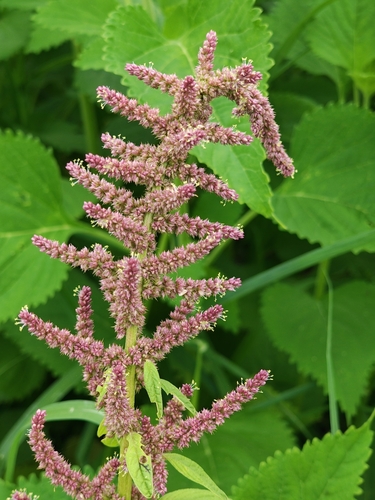
Smooth Pigweed
Amaranthus hybridus
A towering summer annual, Smooth Pigweed is a resilient pioneer that turns disturbed soil into a bustling wildlife buffet. Its protein-rich seeds and dense foliage make it a vital hub for backyard birds and pollinators alike.
Quick Identification
Size
Height ranges from 1 to 8 feet (30-250 cm); leaf length 2 to 6 inches (5-15 cm)
Colors
Dull green to deep reddish-purple stems; yellowish-green or reddish flower spikes; dark green foliage
Key Features
- Smooth, branched stems that may turn reddish with age
- Dense, slender flower clusters (panicles) at the top of the plant
- Alternate, egg-shaped leaves with wavy margins
- Tiny, shiny black seeds produced in late summer
When You’ll See Them
Behavior
Smooth Pigweed is a vigorous annual plant known for its rapid growth and incredible resilience. Emerging in the warmth of late spring, it quickly establishes a deep taproot, allowing it to compete effectively for water and nutrients. While often dismissed as a common garden weed, it is a master of adaptation, capable of thriving in compacted soil, drought conditions, and high-heat environments where other plants might wither.
In the backyard ecosystem, Smooth Pigweed acts as a tall, structural anchor during the summer months. It doesn't move in the traditional sense, but its life cycle is a flurry of activity. Throughout the day, its broad leaves track the sun to maximize photosynthesis. As autumn approaches, the plant focuses all its energy into seed production; a single healthy specimen can produce over 100,000 seeds, making it a primary food source for local wildlife preparing for winter.
EverydayEarth exclusive
Camera Tips
Capturing the beauty of Smooth Pigweed with an AI camera is less about the plant's movement and more about the diverse wildlife it attracts. Because this plant is a magnet for seed-eating birds like Goldfinches, Sparrows, and Indigo Buntings, you should position your camera at a mid-level height (3–4 feet) aimed directly at the ripening flower spikes. Ensure the camera is stabilized on a garden stake or a nearby fence post, as these birds will often land directly on the plant to feed, causing it to sway significantly.
For the best visual results, use the 'Time-Lapse' feature on your camera. Setting a 15-minute interval during the peak growing months of July and August allows you to compress weeks of explosive growth into a few seconds of video, showcasing how the plant towers over surrounding vegetation. If your AI camera has a specific 'Pet' or 'Bird' trigger, increase the sensitivity. The movement of the thin flower panicles in the wind can sometimes cause false triggers, so masking out the very top of the frame where the sky meets the plant can help focus the AI on actual animal visitors.
Lighting is crucial for identifying Amaranthus species. Position your camera so the sun is behind the lens or at a 45-degree angle to the plant. This side-lighting highlights the texture of the 'smooth' stems—a key identification feature—and makes the reddish hues of the stalks pop against the green foliage. During the golden hour (just before sunset), the translucent seed heads catch the light, creating a stunning backdrop for any wildlife captured in the frame.
In late autumn, don't move your camera just because the plant looks brown and dead. This is when the real action happens. Keep your camera active to catch ground-foraging mammals like chipmunks and mice gathering the fallen seeds from the base of the plant. Use a low-angle mount (6–12 inches off the ground) during this phase to capture 'eye-level' footage of these smaller visitors as they navigate the forest of pigweed stalks.
Frequently Asked Questions
Record Smooth Pigweed at your habitat
Connect a camera to start building your own species record — AI identifies every visitor automatically.