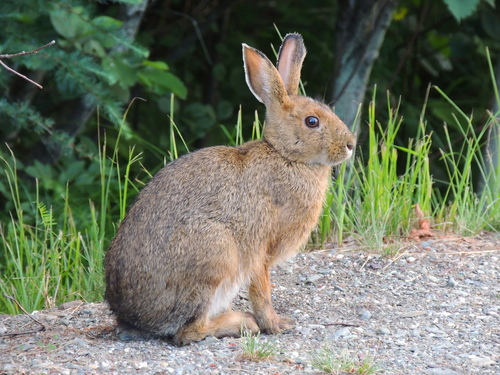
Snowshoe Hare
Lepus americanus
Meet the North American forest's most famous shapeshifter. The Snowshoe Hare is a master of survival, using its oversized 'snowshoe' feet and a color-changing coat to stay one step ahead of the winter cold and hungry predators alike.
Quick Identification
Size
16-20 inches (41-51 cm) in length; 2-4 lbs (0.9-1.8 kg) in weight
Colors
Rusty brown with a white belly in summer; transitions to pure snowy white in winter; distinctive black-tipped ears year-round
Key Features
- Exceptionally large hind feet with thick fur on soles
- Black-tipped ears that are shorter than those of jackrabbits
- Seasonal coat change from brown to white
- Small, white-bottomed tail
When You’ll See Them
Behavior
Snowshoe Hares are the ultimate masters of camouflage, spending much of their day sitting perfectly still in "forms"—shallow depressions under thick brush or fallen trees. They are largely solitary and shy, relying on their keen hearing and wide-set eyes to detect predators like lynx, foxes, and owls long before they are spotted themselves. When threatened, they can leap up to 10 feet in a single bound and reach speeds of 30 mph.
While they don't hibernate, they are highly adapted for harsh winter survival. They are famous for their population cycles, where their numbers peak roughly every ten years, followed by a sharp decline. In a backyard or trail setting, you’ll likely see them cautiously emerging from cover at twilight to feed, often following the same "hare runways" through the undergrowth night after night to ensure a quick escape route is always available.
EverydayEarth exclusive
Camera Tips
To capture the Snowshoe Hare, camera placement is everything. Position your device low to the ground—ideally between 12 and 18 inches high. Since they are relatively small, a camera mounted at eye-level for a human will likely only catch the tops of their heads or miss them entirely. If you’re shooting in winter, aim your camera north to prevent the white snow from reflecting direct sunlight and blowing out your exposure. Look for "hare runs," which look like tiny, well-trodden highways through the snow or grass leading into dense brush; these are high-traffic zones for your lens.
Timing your camera deployment around the seasonal transitions (late autumn and early spring) offers the most dramatic results. This is when you can catch the "mismatch" period, where a hare might be half-white and half-brown against a contrasting background. Because hares are extremely fast and jumpy, use a camera with a fast trigger speed (0.5 seconds or less) and set a short "recovery time" so you don't miss any follow-up action if a predator is chasing them or if a second hare is following the first.
Video mode is highly recommended for this species. A 15-second clip will allow you to see their unique hopping gait or the way they use their massive hind feet to "thump" the ground when they feel a vibration. While we generally discourage heavy baiting, Snowshoe Hares are naturally attracted to mineral blocks or salt licks in the summer. In winter, placing fresh willow or apple tree trimmings in front of the camera can keep them in the frame long enough for a clear, high-quality shot.
If you have a backyard with dense cover, try placing the camera at the edge of a woodpile or a thick evergreen hedge. They feel safest when they have an immediate escape route, so avoid placing cameras in the middle of a wide, open lawn. Check your settings to ensure your night vision (IR) is optimized; since they are crepuscular and nocturnal, most of your best footage will be captured in low light or total darkness. High-glow or no-glow LEDs are preferred so the hare isn't startled by the camera's flash.
Similar Species
Species that look similar or are commonly confused with Snowshoe Hare.
Frequently Asked Questions
Record Snowshoe Hare at your habitat
Connect a camera to start building your own species record — AI identifies every visitor automatically.