Soft Spinifex
Triodia pungens
Meet the sticky architect of the Australian desert. Soft Spinifex isn't just a grass; it's a resinous sanctuary that shelters an entire world of outback wildlife within its golden domes.
Quick Identification
Size
Hummocks grow 0.3-1 meter (1-3.3 feet) tall and can spread up to 1.5 meters (5 feet) in diameter.
Colors
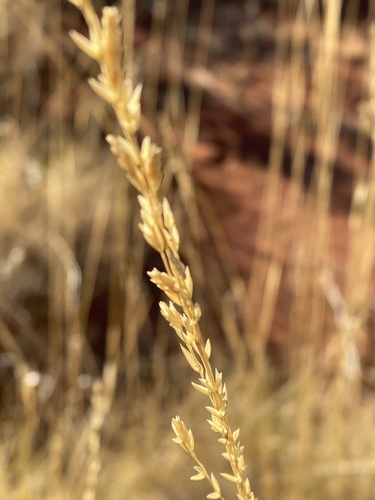
Vibrant lime green to bluish-grey foliage with golden-brown or straw-colored seed heads.
Key Features
- Dome-shaped or 'hummock' growth habit
- Sticky, aromatic resin coating on leaves and stems
- Flexible, pointed leaves that are less rigid than 'hard' spinifex
- Tall, slender flower spikes that rise well above the main mound
When You’ll See Them
Behavior
Soft Spinifex is a foundational species of the Australian outback, known for its unique hummock growth pattern. Unlike many grasses that grow in individual tufts, Soft Spinifex creates dense, interlocking domes that act as miniature fortresses for desert life. These mounds are highly resinous; the plant produces a sticky substance that helps it retain moisture in extreme heat and protects it from high UV radiation. This resin was historically used by Indigenous Australians as a powerful adhesive for tool-making.
Ecologically, the plant is a master of survival. It is highly flammable and often burns in intense bushfires, but it is one of the first species to bounce back, either by resprouting from its base or through fire-stimulated seed germination. It plays a vital social role in the desert ecosystem, providing nesting sites for birds and cooling shade for reptiles that would otherwise perish in the midday sun.
EverydayEarth exclusive
Camera Tips
To get the most out of your camera setup for Soft Spinifex, you should treat the plant as a stage rather than just a subject. Because this grass is a 'habitat hub,' place your camera on a low tripod or ground mount, angled slightly upward from about 15 centimeters (6 inches) off the ground. This 'lizard-view' perspective captures the intricate architecture of the hummock and any small creatures entering or exiting the base of the mound. Since the plant is stationary, use the 'Golden Hour'—the hour after sunrise or before sunset—to highlight the resinous sheen on the leaves, which can look almost metallic on camera.
For AI-powered cameras, the primary challenge is false triggers caused by the grass swaying in the wind. To mitigate this, clear any very thin, loose strands directly in front of the lens, but keep the main body of the plant in frame. If your camera allows for 'Zone Detection,' focus the trigger area on the dark openings at the base of the hummock where lizards and small mammals like the Fat-tailed Dunnart are likely to emerge. A time-lapse setting of one photo every 15 minutes is also a fantastic way to document the plant's seasonal changes, such as the rapid emergence of seed heads after a rain event.
Be mindful of the plant’s resin when positioning your gear. In high heat, Soft Spinifex can be quite 'leaky,' and the sticky sap is notoriously difficult to remove from camera lenses and plastic casings. Avoid letting the foliage touch your equipment directly. For the best action shots, consider placing a small water dripper or a safe bird bath near the edge of the spinifex mound; birds like the Spinifex Pigeon or Variegated Fairy-wren often move between the safety of the grass and water sources, providing excellent high-speed trigger opportunities.
Frequently Asked Questions
Record Soft Spinifex at your habitat
Connect a camera to start building your own species record — AI identifies every visitor automatically.