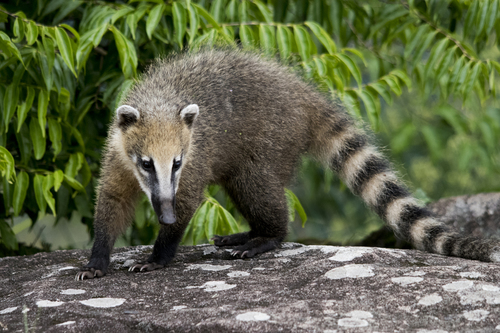
South American Coati
Nasua nasua
The South American Coati is the forest's most charismatic socialite. With a periscope-like tail and a nose for adventure, these intelligent mammals bring a sense of playful energy to any backyard camera.
Quick Identification
Size
85–113 cm (33–44 in) in total length; weight ranges from 2–7.2 kg (4.4–15.9 lb)
Colors
Variable fur ranging from reddish-brown to gray-brown; tail features dark rings; dark brown or black snout without the white markings of its northern relatives
Key Features
- Long, flexible snout used for probing crevices
- Ringed tail often held vertically while walking
- Strong, non-retractable claws for climbing and digging
- Highly social behavior with females traveling in large 'bands'
When You’ll See Them
Behavior
The South American Coati is a highly social and intelligent member of the raccoon family. Unlike most of their relatives, coatis are primarily diurnal, meaning you are most likely to spot them during the day. They are famous for their 'bands'—social groups of up to 30 females and juveniles that travel together to forage, groom, and protect one another. Adult males, however, are typically solitary and only join the bands during the breeding season.
These animals are incredibly agile, moving seamlessly between the forest floor and the high canopy. When moving through thick undergrowth, they often hold their long, ringed tails straight up in the air, acting as a visual signal to keep the group together. They are vocal creatures, communicating with a variety of chirps, snorts, and grunts that your camera's microphone might pick up if they get close enough.
EverydayEarth exclusive
Camera Tips
To capture the best footage of South American Coatis, camera height is your most important variable. Because they spend the majority of their day foraging with their noses to the ground, mount your camera low—about 12 to 15 inches (30-40 cm) off the forest floor. Angle the camera slightly upward to ensure you capture their full profile, especially that iconic upright tail. If you have a tree with low-hanging fruit in your yard, consider a second camera mounted at chest height to catch them as they climb.
Since coatis travel in groups, using 'Burst Mode' or 'Multi-Shot' is a must. A single photo will likely only catch the lead female, but a three-to-five shot burst will capture the chaos of the entire band following behind. Alternatively, set your camera to record 15-20 second video clips. Coatis are very active and their social interactions—grooming, playing, and occasional squabbles over food—are far better documented in video than in still images.
Attracting coatis naturally is easy if you have fallen logs or piles of leaf litter, as these are 'supermarkets' for the insects they love. During the dry season, a shallow ground-level water dish is an irresistible draw. Be aware that coatis are famously curious and may investigate your camera with their sensitive snouts. Using a metal security box (bear box) can prevent them from knocking the camera out of alignment or chewing on the casing. If your camera allows for it, set a fast trigger speed (under 0.5 seconds) to catch these quick-moving mammals before they vanish into the brush.
Similar Species
Species that look similar or are commonly confused with South American Coati.
Frequently Asked Questions
Record South American Coati at your habitat
Connect a camera to start building your own species record — AI identifies every visitor automatically.