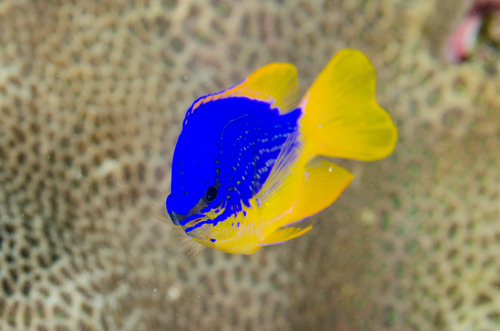
South Seas Demoiselle
Chrysiptera taupou
The South Seas Demoiselle is a tiny bolt of sapphire lightning that brings a splash of neon color to the western Pacific reefs. Known for its 'devilish' personality and stunning gold-and-blue contrast, this is the crown jewel of the shallow lagoons.
Quick Identification
Size
Grows to a maximum length of 3 inches (8 cm).
Colors
Brilliant, iridescent sapphire blue on the upper body and face; vivid sun-yellow on the belly, pelvic, and anal fins.
Key Features
- Electric blue upper body and yellow lower body
- Small black ocellus (eyespot) on the rear of the dorsal fin
- Neon blue facial spotting
- Deeply forked tail with blue edging
When You’ll See Them
Behavior
The South Seas Demoiselle is a small but mighty resident of the reef, often nicknamed the 'Southseas Devil' by divers and aquarium enthusiasts. This name stems from their incredibly feisty and territorial nature. They claim a specific rocky crevice or coral head as their own and will fearlessly defend it against fish many times their size, using quick, darting movements to intimidate intruders.
In their natural habitat, they are active during the day, patrolling the water column just above the reef to hunt for drifting snacks. While they are technically social and can be found in loose aggregations, every individual maintains a strict personal bubble. Their boldness makes them a delight for wildlife watchers; unlike more skittish species, the South Seas Demoiselle will often stay in plain sight, confidently guarding its home while watching you right back.
EverydayEarth exclusive
Camera Tips
Capturing the South Seas Demoiselle on camera requires a focus on lighting to truly showcase their neon coloration. If you are using an underwater trail camera or an AI-powered reef cam, position the lens so that it faces a well-lit area of the reef or rockwork. The blue scales are highly reflective and look best when the sun is directly overhead (midday) or when using high-CRI (Color Rendering Index) underwater lights. Avoid placing the camera directly facing the sun to prevent silhouetting this small subject.
Because these fish are highly territorial, the most effective strategy is 'stakeout' photography. Identify a specific rock cavity where you see the fish frequently retreating. Mount your camera on a weighted tripod or a secure crevice mount about 12-18 inches away from this home base. These fish are creatures of habit and will usually return to the exact same spot within minutes of a disturbance. Be patient; once the fish accepts the camera as a non-threatening part of the landscape, it will perform its natural 'patrolling' behaviors right in front of the sensor.
For the best results with AI motion triggers, set the sensitivity to high and use a fast shutter speed. The South Seas Demoiselle is a rapid swimmer, and slow frame rates will result in a blue blur. If your camera allows for it, use a 'burst' mode to capture 3-5 images per trigger. To entice them into the focal zone for a closer look, you can place a small amount of frozen mysis shrimp or algae-based fish food in a mesh feeder just out of the camera's frame. They are opportunistic feeders and will quickly approach to investigate any food source that drifts into their territory.
Frequently Asked Questions
Record South Seas Demoiselle at your habitat
Connect a camera to start building your own species record — AI identifies every visitor automatically.