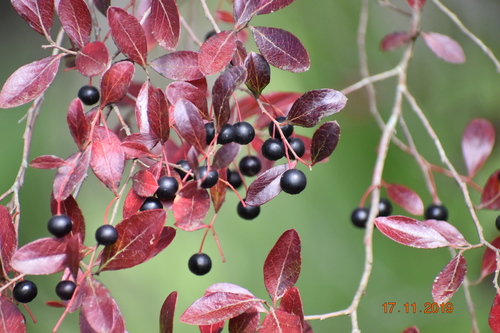
sparkleberry
Vaccinium arboreum
The tallest of the native blueberries, the Sparkleberry is a hardy Southern icon known for its characterful twisted trunk and delicate white bells. It serves as a vital winter pantry for wildlife when other food sources have vanished.
Quick Identification
Size
Height: 3–10 m (10–33 ft); Trunk diameter: 10–30 cm (4–12 in)
Colors
Glossy dark green leaves; white bell-shaped flowers; shiny black berries; grey-brown exfoliating bark
Key Features
- Distinctive twisted trunk with peeling or exfoliating grey-brown bark
- Small, white, bell-shaped flowers that hang in profuse clusters
- Shiny, leathery leaves that turn a brilliant red or burgundy in late autumn
- Small, black berries about 6mm in diameter that persist into the winter
When You’ll See Them
Geographic range
Where Does the sparkleberry Live?
Native to the North American continent, the Sparkleberry is a quintessential species of the Southeastern and South-central United States. Its natural range stretches from Virginia and Kentucky south into the Florida peninsula, extending westward across the Gulf States into East Texas and as far north as Missouri and Kansas. This species thrives in the varied landscapes of the American South, particularly favoring the Piedmont and Coastal Plain regions where acidic soils are prevalent.
Basemap © OpenStreetMap contributors
Behavior
During the spring, the Sparkleberry becomes a focal point of the ecosystem as it bursts into bloom, providing a vital nectar source for a diverse array of pollinators. In the winter, it plays a critical 'bridge' role for wildlife; its berries are dry and less palatable than summer blueberries, which means they are often ignored until other food sources have been depleted, providing life-saving nutrition for birds during the coldest months.
EverydayEarth exclusive
Camera Tips
During the spring flowering season, use a camera with a fast trigger speed and high-resolution video capabilities. Set the camera to focus on a dense cluster of the white bell-shaped flowers to document the 'buzz pollination' behavior of native bees, such as the Southeastern Blueberry Bee. A high-speed setting will help freeze the motion of the wings and provide clear identification of the various insect visitors.
For night captures, ensure your camera's infrared flash is properly calibrated. Sparkleberry fruits often persist through the winter, attracting nocturnal visitors like raccoons or even deer browsing the twigs. Because the bark of the Sparkleberry is quite reflective and textured, avoid placing the flash too close to the main trunk to prevent 'white-out' in your images. Instead, aim for a clear line of sight to the outer fruit-bearing branches.
Consider using a time-lapse setting during the autumn months. Sparkleberry foliage undergoes a dramatic color shift from deep green to vibrant red. By taking one or two photos a day throughout October and November, you can create a stunning visual record of the tree's transition, which also serves as a great indicator of when you should expect an uptick in bird activity as the fruit ripens.
Similar Species
Species that look similar or are commonly confused with sparkleberry.
Frequently Asked Questions
Record sparkleberry at your habitat
Connect a camera to start building your own species record — AI identifies every visitor automatically.