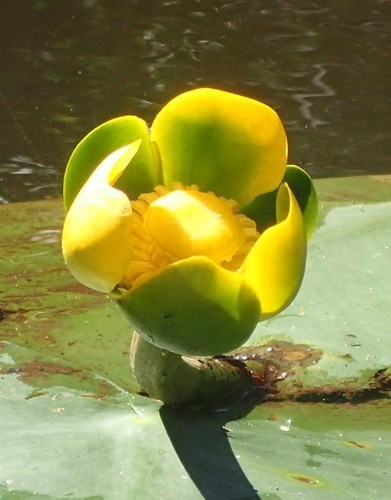
spatterdock
Nuphar advena
A vibrant staple of North American wetlands, the Spatterdock offers more than just beauty—it is a bustling hub for aquatic life. Its iconic yellow 'cow-lily' blooms and massive heart-shaped leaves provide the perfect stage for observing frogs, turtles, and dragonflies.
Quick Identification
Size
Leaves reach 8-16 inches (20-40 cm) in length; flower diameter 1-2 inches (2.5-5 cm); stems can grow up to 6 feet to reach the surface.
Colors
Bright yellow globose flowers; vibrant green heart-shaped leaves; occasionally red or purple-tinged undersides and stems.
Key Features
- Cup-shaped yellow flowers that never fully open
- Large heart-shaped leaves with a deep notch at the base
- Thick, spongy stems extending from underwater rhizomes
- Central yellow disk-like stigma inside the flower
When You’ll See Them
Behavior
Spatterdock, often known as the Yellow Pond-lily, is a resilient aquatic perennial that plays a vital role in freshwater ecosystems. Unlike many water lilies that float flat on the surface, Spatterdock often holds its leaves and flowers several inches above the water line on thick, sturdy stalks. It grows from massive, starchy rhizomes buried in the muck, which can spread extensively to create dense colonies that provide essential cover for fish.
Its flowering behavior is particularly interesting to watch through a lens. The yellow sepals create a cup-like shape that protects the reproductive organs, and unlike the Fragrant Water Lily, these blooms stay partially closed, looking like a sphere. It relies heavily on specialized leaf beetles and flies for pollination. While it doesn't 'move' in the animal sense, it creates a bustling 'neighborhood' for backyard wildlife, providing shade for aquatic life and sturdy landing pads for dragonflies and frogs.
EverydayEarth exclusive
Camera Tips
Capturing Spatterdock effectively requires a different approach than tracking mobile wildlife. Because this species stays put, the best way to utilize an AI-powered camera like those from EverydayEarth is to set it up for a time-lapse sequence. Mount your camera on a stable post, dock piling, or a weighted tripod placed in shallow water. Aim for a slightly elevated angle looking down at a cluster of flowers to capture the dramatic transition from tight green buds to bright yellow blooms. The best footage usually occurs over a 48-hour window during peak summer heat when growth is most rapid.
Lighting is your biggest challenge and your best friend. To avoid the harsh 'white-out' glare from the sun reflecting off the waxy leaves or the water surface, position your camera facing north or south rather than east or west. This prevents the lens from looking directly into the rising or setting sun. Early morning light (6-8 AM) provides a soft, golden glow that highlights the texture of the leaves and the deep yellow of the sepals without blowing out the highlights. If your camera has adjustable exposure settings, dropping the exposure by one notch can help preserve the rich, deep greens of the foliage.
Don't just focus on the plant itself; use the Spatterdock as a 'stage' for other backyard visitors. The large, sturdy leaves are favorite sunning spots for Painted Turtles and resting places for Bullfrogs. Set your camera’s trigger sensitivity to high and focus on a specific leaf that sits slightly above the water. This is where you’ll catch the best 'action' shots of insects and amphibians. If you are using a trail camera with video capability, a 15-second clip triggered by movement will often reveal the underwater world as fish and aquatic insects dart between the thick, trunk-like stems.
For those looking to capture the plant’s full life cycle, keep the camera in place for several weeks throughout the summer. You can document the transition from the iconic yellow flower to the distinctive green, flask-shaped seed pods. Ensure your camera is well-secured against wind and water level fluctuations. A heavy-duty waterproof housing is essential, and placing a desiccant pack inside the housing will prevent the lens from fogging up during the humid summer nights when the water is significantly warmer than the air.
Similar Species
Species that look similar or are commonly confused with spatterdock.
Frequently Asked Questions
Record spatterdock at your habitat
Connect a camera to start building your own species record — AI identifies every visitor automatically.