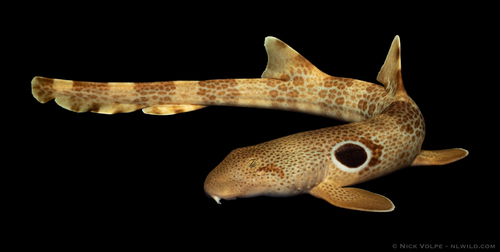
Speckled Carpetshark
Hemiscyllium trispeculare
The Speckled Carpetshark is the ocean's most charismatic pedestrian, a tiny predator that walks across the reef on its fins. Densely freckled and perfectly adapted to the shallows, it is a master of the Australian tide pools.
Quick Identification
Size
Up to 79 cm (31 inches) in length; typically slender with a weight under 2 kg (4.4 lbs)
Colors
Tan to light brown base with a dense pattern of small dark brown spots (speckles); features a prominent black 'epaulette' spot ringed in white behind the head.
Key Features
- Large black spot behind the gills surrounded by a white halo
- Thick, muscular pectoral and pelvic fins used for walking
- Body covered in a fine, leopard-like pattern of small dark dots
- Slender, elongated body with two dorsal fins of nearly equal size
When You’ll See Them
Behavior
The Speckled Carpetshark is a fascinating nocturnal predator that has traded traditional swimming for a unique 'walking' gait. Using its muscular, paddle-like pectoral and pelvic fins, it crawls across the seafloor and maneuvers through tight crevices in coral reefs. This specialized movement allows it to hunt in incredibly shallow water, sometimes only a few inches deep, where larger sharks cannot venture.
During the day, these sharks are masters of hide-and-seek, tucking themselves under plate corals or inside rocky ledges to avoid larger predators. They are known for their incredible hardiness; they can survive in low-oxygen environments, such as isolated tide pools during low tide, by slowing their metabolism and diverting oxygen to their brain. While they are solitary hunters, they are generally docile and will usually ignore divers or snorkelers unless provoked.
EverydayEarth exclusive
Camera Tips
To capture the Speckled Carpetshark on your underwater trail camera, you need to think about the 'walking' paths they take. Unlike open-water fish, these sharks stick close to the substrate. Mount your camera on a weighted base or a very low-profile underwater tripod, positioning the lens just 4 to 6 inches above the seabed. Aim the camera toward a sandy clearing surrounded by coral heads or at the mouth of a small underwater cave, as these are the shark's primary highways and hunting grounds.
Since this species is strictly nocturnal, the quality of your camera's night vision is paramount. Standard white light can frighten them, so if your AI-powered camera supports it, use infrared (IR) or a very dim red light to illuminate the scene. The goal is to catch their unique 'walking' motion, so set your camera to take 20-30 second video clips rather than still photos. This gives the AI enough footage to identify the specific movement patterns of a carpetshark and ensures you don't miss the slow, deliberate crawl that defines the species.
If you are struggling to get a sighting, a scent-based lure can be extremely effective. Place a small amount of crushed oily fish or shrimp inside a perforated PVC tube or mesh bag and secure it directly in front of the camera's field of view. The shark's keen sense of smell will lead it right to the lens. Check the tides before deployment; the best footage is often captured during an incoming tide at night, as the sharks move from deeper water into the shallow reef flats to begin their evening foraging.
Similar Species
Species that look similar or are commonly confused with Speckled Carpetshark.
Frequently Asked Questions
Record Speckled Carpetshark at your habitat
Connect a camera to start building your own species record — AI identifies every visitor automatically.