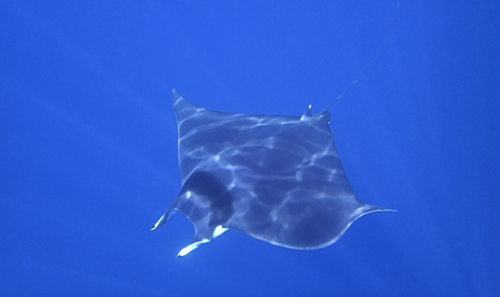
Spinetail Devil Ray
Mobula mobular
The Spinetail Devil Ray is a breathtaking ocean acrobat, known for its massive wingspan and its habit of leaping high above the waves. Though rare and endangered, this gentle giant is a true crown jewel for any coastal wildlife watcher.
Quick Identification
Size
Disc width up to 5.2 meters (17 feet); weight up to 1,000 kg (2,200 lbs)
Colors
Dark navy blue to black on the dorsal side; solid white or pale cream on the ventral (under) side
Key Features
- Distinctive 'horns' (cephalic fins) on the head
- Pointed, wing-like pectoral fins
- Long, whip-like tail with a small spine at the base
- White underbelly with no dark spotting
When You’ll See Them
Behavior
The Spinetail Devil Ray is one of the most majestic 'flyers' of the ocean. Unlike many other ray species that spend their time camouflaged on the sandy bottom, the Devil Ray is a pelagic species, meaning it spends its life swimming in the open water column. They are known for their incredible grace and social nature, often traveling in small schools. One of their most famous behaviors is breaching, where they launch themselves several feet out of the water, performing acrobatic flips before landing with a resounding splash.
While they may look intimidating due to their size and 'horns,' these rays are gentle filter feeders and pose no threat to humans. They are curious but generally shy around divers and boats. Unfortunately, they are highly sensitive to human activity and are currently listed as endangered, primarily due to being accidentally caught in industrial fishing nets.
EverydayEarth exclusive
Camera Tips
Capturing a Spinetail Devil Ray on camera is a thrill that requires a specialized approach, typically involving an underwater housing or a pier-mounted setup. If you live on a coastal property with access to deep water or a long dock, mount your AI-powered camera in a waterproof housing approximately 3 to 6 feet below the surface. Point the lens slightly upward to take advantage of the natural sunlight filtering down; this 'backlighting' effect makes it much easier for AI software to recognize the ray's distinct diamond-shaped silhouette against the bright surface.
Unlike backyard birds, you cannot use traditional bait to attract these rays, as they only eat live, microscopic plankton. However, you can 'bait' the area with light. During night-time or twilight observations, a strong green or blue underwater LED light can attract clouds of plankton, which in turn may draw a Spinetail Devil Ray into your camera's field of view for a midnight snack. Ensure your camera is set to a high frame rate (at least 60fps) because, despite their size, these rays can glide through the frame surprisingly fast.
For the best results, place your camera near natural bottlenecks like the end of a jetty or a narrow channel where tidal currents are strong. These currents naturally concentrate the plankton that the rays feed on. If you are using a trail camera from a high vantage point (like a balcony or cliffside), use a circular polarizing filter on the lens to cut through the water's surface glare, allowing the camera to 'see' the dark shapes of the rays moving beneath the waves.
Frequently Asked Questions
Record Spinetail Devil Ray at your habitat
Connect a camera to start building your own species record — AI identifies every visitor automatically.