Spinner Shark
Carcharhinus brevipinna
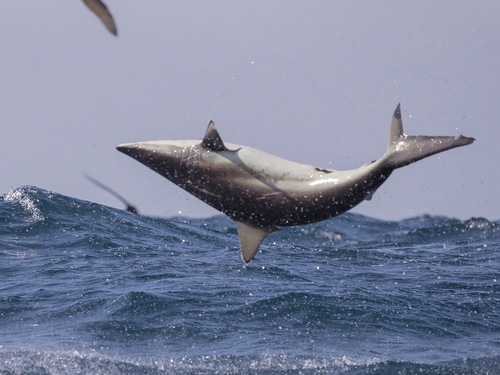
Meet the ocean's most acrobatic hunter. The Spinner Shark is famous for its high-speed vertical leaps and spiraling aerial displays that leave onlookers in awe.
Quick Identification
Size
Typically 2–2.5 m (6.6–8.2 ft) long, reaching a maximum of 3 m (9.8 ft); weighs 56–90 kg (123–198 lbs).
Colors
Bronze-grey to silver-grey upper body with a distinct white underside and a faint white band on the flanks. Fins are typically tipped with black, most notably on the anal fin.
Key Features
- Distinctive black tip on the anal fin (distinguishes it from the Blacktip Shark)
- Slender, streamlined body with a long, pointed snout
- First dorsal fin originates behind the free rear tip of the pectoral fins
- Famous for performing vertical, spinning leaps out of the water while feeding.
When You’ll See Them
Geographic range
Where Does the Spinner Shark Live?
The Spinner Shark inhabits warm-temperate and tropical waters across the Atlantic, Indian, and Western Pacific Oceans. It is a common sight along the eastern coast of the United States, stretching from Virginia down to the Gulf of Mexico and Brazil, while also maintaining a strong presence from the Mediterranean through the coast of South Africa and across to Australia. This species is notably absent from the Eastern Pacific, preferring the island chains and coastal shelves of the Indo-Pacific region.
Basemap © OpenStreetMap contributors
Behavior
Highly social and often found in large schools, these sharks are migratory in many parts of their range, moving toward the poles in summer and back to the equator in winter. While they are often seen near surfers and swimmers in coastal waters, they are generally not aggressive toward humans; most 'encounters' are accidental during feeding frenzies when visibility is low.
These sharks are also known for their gender-segregated schooling patterns outside of the mating season. They are swift swimmers and can cover vast distances, often following the seasonal movements of baitfish like mullet or menhaden along the continental shelves.
EverydayEarth exclusive
Camera Tips
For underwater viewing from a dock, mount your camera in a waterproof housing about 3 to 5 feet below the surface, facing toward the current. Spinner Sharks often follow the tide, so setting your camera to record during incoming high tides—when baitfish are pushed closer to structures—is the most effective strategy. Use a wide-angle lens to account for the shark's rapid, unpredictable movements through the frame.
Lighting is a major factor when filming sharks. During the day, the sun can cause heavy reflection on the water's surface; a polarized filter on your camera lens can help cut through the glare to see the silhouette beneath. At night, avoid using bright white spotlights which can startle the fish; instead, use infrared or very low-intensity blue lights to observe their nocturnal hunting behavior without interference.
If you are trying to attract them to your 'backyard' dock area, look for natural indicators like diving birds or 'boiling' water caused by baitfish. While chumming is an option in some areas, check local regulations first, as it can be restricted near swimming beaches. A simple shiny 'flasher' or spoon lure suspended in the water can often pique the curiosity of a passing Spinner Shark and bring it right in front of your lens.
Frequently Asked Questions
Record Spinner Shark at your habitat
Connect a camera to start building your own species record — AI identifies every visitor automatically.