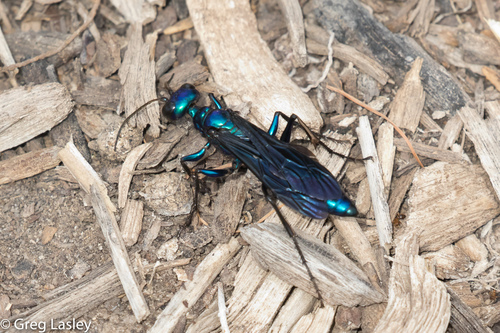
Steel-blue Cricket-hunter Wasp
Chlorion aerarium
A shimmering jewel of the garden, the Steel-blue Cricket-hunter is a master of pest control and one of the most striking solitary wasps you'll ever encounter.
Quick Identification
Size
20–30 mm (0.8–1.2 inches) in length
Colors
Brilliant iridescent metallic steel-blue to blue-green; wings are also tinted with a dark smoky blue-violet sheen.
Key Features
- Extremely thin 'thread-waist' petiole
- Overall metallic blue or blue-green coloration
- Large, dark compound eyes
- Rapidly vibrating or flicking wings while moving on the ground
When You’ll See Them
Behavior
Despite their intimidating appearance, Steel-blue Cricket-hunters are solitary wasps, meaning they don't have a hive to protect and are remarkably docile toward humans. You’ll often spot them frantically exploring the ground or garden foliage. Unlike social wasps, the female is a lone architect and provider, spending her summer days excavating deep burrows in sandy soil where she will eventually house her offspring.
Their hunting behavior is a marvel of nature. A female will track down a cricket, paralyze it with a precision sting to the nervous system, and then drag the heavy prize back to her burrow. Because they are solitary, they are not aggressive; they would much rather spend their energy hunting garden pests than bothering people, making them excellent, low-maintenance neighbors for any backyard gardener.
EverydayEarth exclusive
Camera Tips
To capture these fast-moving gems on camera, focus your efforts on 'resource hotspots.' Look for patches of bare, loose soil near flower beds—this is where females are likely to dig their burrows. If you find a small hole about the diameter of a nickel with a pile of fresh dirt nearby, set your camera at a low angle (about 2-4 inches off the ground) focused right on the entrance. Because these wasps move quickly, use a high shutter speed or a 'burst' photo mode to catch them as they drag crickets into the hole.
If you aren't finding burrows, target their fuel source. Plant native late-summer bloomers like Goldenrod, Rattlesnake Master, or Milkweed. Place your AI camera within 12-18 inches of the flower heads. For the best color payoff, ensure the camera is positioned so the sun is behind it; the direct light will make the wasp's metallic blue exoskeleton pop with a vibrant shimmer that looks incredible in high-definition video.
Since these wasps are relatively small, a macro lens attachment or a camera with a short minimum focus distance is essential. If your camera supports it, enable 'high sensitivity' motion triggering, as the quick, jerky movements of a wasp can sometimes be missed by standard PIR sensors. Mid-day is the best time for filming, as they require the heat of the sun to reach peak activity levels.
Frequently Asked Questions
Record Steel-blue Cricket-hunter Wasp at your habitat
Connect a camera to start building your own species record — AI identifies every visitor automatically.