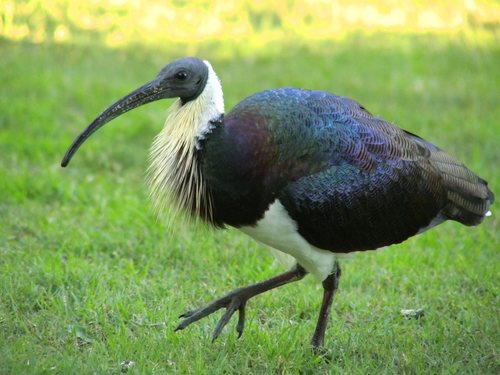
Straw-necked Ibis
Threskiornis spinicollis
With their shimmering iridescent wings and unique 'straw' collar, the Straw-necked Ibis is a striking sight in any backyard. Known as a guardian of the garden, this diligent hunter helps keep pest populations in check while displaying fascinating social behaviors.
Quick Identification
Size
Length: 60-75 cm (24-30 in); Wingspan: 100-120 cm (39-47 in); Weight: 1.1-1.5 kg (2.4-3.3 lb)
Colors
Metallic black wings and back with purple and green iridescence; white underparts and neck; distinctive yellow, straw-like feathers on the foreneck; bald black head and down-curved bill.
Key Features
- Stiff yellow straw-like feathers on the neck
- Deeply down-curved long black bill
- Iridescent dark wings contrasting with a white belly
- Bald black skin on the head and neck
When You’ll See Them
Behavior
Known as the 'Farmer’s Friend,' the Straw-necked Ibis is a highly social bird often seen marching across open grasslands and suburban lawns in search of prey. Unlike its cousin, the Australian White Ibis, this species is less likely to be found scavenging in bins and prefers hunting live insects in the soil. They are nomadic, often traveling long distances in V-shaped formations to follow rainfall and seasonal food sources.
These birds are generally wary of humans but have adapted well to suburban life, particularly in areas with large, well-watered parks or gardens. When not foraging, they roost in tall trees or near wetlands, often in large communal groups. Their social nature means that if you see one on your camera, there are likely several more nearby, communicating with low croaking sounds during flight or while nesting.
EverydayEarth exclusive
Camera Tips
To capture the best footage of the Straw-necked Ibis, place your camera at a low height—roughly 1 to 2 feet off the ground. These birds are terrestrial foragers, meaning they spend the vast majority of their time on the grass. Aim your camera across a wide, flat patch of lawn or a garden edge where the soil stays moist. A slightly upward angle can help highlight the iridescent sheen on their wings and the unique texture of their straw-like neck feathers.
While we don't recommend artificial feeding, you can naturally attract them by keeping your lawn well-watered or by leaving a short patch of grass where they can easily probe for grubs and crickets. They are particularly active on 'mowing days' when insects are disturbed. Setting your camera to 'Burst Mode' or capturing high-frame-rate video is essential; their probing movements are quick and repetitive, and you'll want to catch the moment they pull a meal from the earth.
Since these birds are quite large and travel in groups, use a wide-angle lens setting if your camera allows it. This prevents the 'accidental close-up' where you only see a blur of white feathers. Early morning light is your best friend—the low sun brings out the metallic greens and purples in their plumage that usually look black in flat midday light. If your camera has a PIR (passive infrared) sensor, set the sensitivity to high, as their feathers are well-insulated and may not always trigger a low-sensitivity sensor.
Similar Species
Species that look similar or are commonly confused with Straw-necked Ibis.
Frequently Asked Questions
Record Straw-necked Ibis at your habitat
Connect a camera to start building your own species record — AI identifies every visitor automatically.