Swamp Paperbark
Melaleuca ericifolia
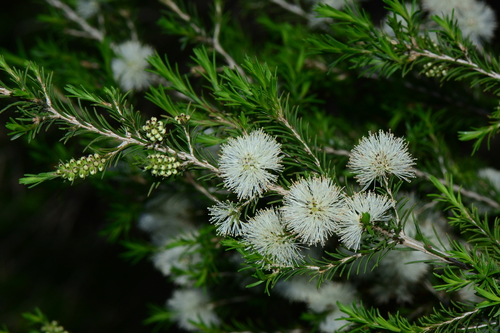
A coastal icon of southeastern Australia, the Swamp Paperbark is more than just a tree—it's a living sanctuary. With its signature peeling bark and 'snowy' white flowers, it brings a flurry of bird and insect life to any backyard.
Quick Identification
Size
Height: 2–9 meters (6.5–30 feet); Spread: 3–6 meters (10–20 feet)
Colors
Creamy-white flower spikes; dark green needle-like foliage; white to light tan papery bark
Key Features
- Distinctive white, papery bark that peels in layers
- Short, needle-like leaves 5-15mm long
- Small, cylindrical white flower spikes up to 1 inch long
- Dense, multi-stemmed thicket growth habit
When You’ll See Them
Behavior
The Swamp Paperbark is a hardy, fast-growing Australian native that plays a crucial role in its ecosystem. It is famous for its thicket-forming habit, creating dense 'forests' that provide essential cover for small birds, mammals, and frogs. In the wild, these stands act as natural filters for waterways, though in a backyard setting, they are more frequently used as privacy screens or windbreaks.
During its flowering season, the tree undergoes a dramatic transformation, appearing as though it is covered in a light dusting of snow. This prolific blooming period triggers intense activity from local pollinators. Humans find the tree particularly tactile due to its soft, sponge-like bark, which has been used historically for everything from bedding to roofing and even as a natural wrap for food.
EverydayEarth exclusive
Camera Tips
When targeting the Swamp Paperbark with your AI camera, focus on the 'pollinator window' during the late spring and early summer. Position your camera approximately 1.5 to 2 meters (5-6 feet) off the ground, aiming at a dense cluster of flower spikes. This height is perfect for capturing honeyeaters, butterflies, and native bees that are drawn to the nectar. Use a high shutter speed if possible, as the birds visiting these flowers move very quickly.
The white, papery bark is highly reflective, which can sometimes 'blow out' or overexpose your images during midday sun or when using an infrared flash at night. To counter this, try to angle your camera so the trunk is partially shaded or set your exposure compensation slightly lower. If your camera supports time-lapse, the Swamp Paperbark is an ideal subject for a multi-day project during its blooming phase to see the transition from green buds to 'bottlebrush' flowers.
Don't ignore the base of the tree at night. The dense, peeling bark at the trunk provides excellent hiding spots for small reptiles and nocturnal mammals like sugar gliders. Set a secondary camera low to the ground (about 30cm or 1 foot) facing the main trunk to catch movement of critters climbing the 'paper' layers to find insects or nesting materials. If the weather is windy, ensure your motion sensitivity is adjusted, as the fine, needle-like leaves can trigger many false alerts.
Similar Species
Species that look similar or are commonly confused with Swamp Paperbark.
Frequently Asked Questions
Record Swamp Paperbark at your habitat
Connect a camera to start building your own species record — AI identifies every visitor automatically.