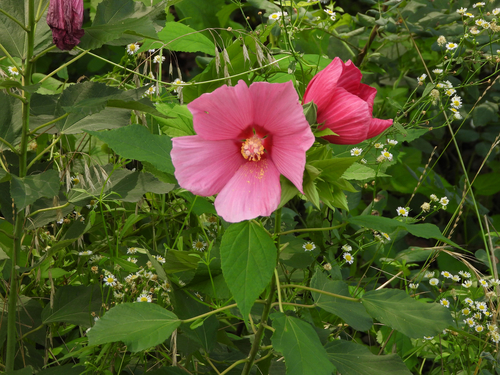
swamp rose mallow
Hibiscus moscheutos
A giant of the American wetlands, the swamp rose mallow produces some of the largest native flowers in North America. Its dramatic crimson-eyed blooms are a magnet for specialized bees and hummingbirds alike.
Quick Identification
Size
Stems reach 3–7 ft (0.9–2.1 m) tall; flowers measure 4–8 in (10–20 cm) in diameter
Colors
Petals range from creamy white to vibrant pink, typically featuring a deep crimson or maroon 'eye' at the center.
Key Features
- Massive dinner-plate sized flowers with five overlapping petals
- Prominent central column of yellow stamens
- Hairy, heart-shaped or lobed leaves with a velvety underside
- Tall, multi-stemmed perennial growth habit
When You’ll See Them
Behavior
The swamp rose mallow is a dramatic perennial that acts as a focal point in any wetland ecosystem. Unlike many delicate wildflowers, this species is robust and tall, often forming dense colonies that provide significant cover for small marsh birds and insects. Each individual flower is ephemeral, typically opening in the morning and wilting by sunset, but the plant produces a continuous succession of blooms throughout the peak of summer, ensuring a constant splash of color in the landscape.
As a key player in the 'pollinator highway,' the swamp rose mallow has a fascinating relationship with specialist insects. It is the primary host for the Hibiscus Scoliid Wasp and the Rose-mallow Bee (Ptilothrix bombiformis), which has evolved specifically to forage on these large blooms. While it may look like a tropical transplant, it is incredibly cold-hardy, dying back to the ground in winter and regrowing with surprising speed once the soil warms in late spring.
EverydayEarth exclusive
Camera Tips
Capturing the swamp rose mallow on camera is less about 'trapping' an animal and more about setting a stage for the incredible wildlife it attracts. To get the best shots, position your camera on a stake or tripod roughly 3 to 4 feet off the ground, angled slightly downward toward a cluster of healthy buds. Because these flowers are so large, they make an excellent 'target' for AI-powered cameras to lock onto when looking for movement from hummingbirds or large butterflies like the Eastern Tiger Swallowtail.
For the best lighting, face your camera North or South to avoid the harsh glare of the rising or setting sun, which can wash out the delicate white or pink petals. If your camera has a timelapse feature, this is the perfect species for it. Set the interval to capture a frame every 5-10 minutes starting at dawn; you will be able to record the dramatic 'unfurling' of the blooms as they react to the morning light. This also helps you document the short-lived nature of each flower.
In terms of settings, use a high-sensitivity motion trigger if you are hoping to catch the specialized Rose-mallow Bee. These bees are fast and move in erratic bursts, so a 'burst mode' or short video clip (10-15 seconds) is preferable to a single still image. If you are placing a trail camera near a wild colony, look for 'deer paths' nearby; while deer don't always eat the mature woody stems, they are often attracted to the lush, succulent new growth in early summer, providing a secondary subject for your footage.
Frequently Asked Questions
Record swamp rose mallow at your habitat
Connect a camera to start building your own species record — AI identifies every visitor automatically.