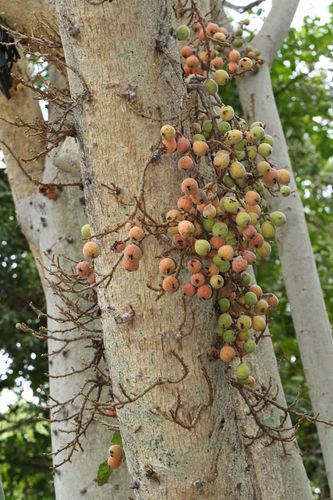
sycamore fig
Ficus sycomorus
Ancient, massive, and teeming with life, the Sycamore Fig is a legendary 'Tree of Life' that supports entire ecosystems. Its distinctive trunk-growing fruit and yellowish bark make it one of the most recognizable giants of the wild landscape.
Quick Identification
Size
Height up to 20m (65 ft); canopy spread up to 30m (100 ft); trunk diameter up to 6m (20 ft)
Colors
Pale yellow to greenish-orange papery bark; dark green leaves; fruit turns from green to yellow or pale red
Key Features
- Large heart-shaped leaves with a rough, sandpaper-like texture
- Figs grow in dense clusters directly on the main trunk and old branches
- Distinctive yellowish-orange bark that peels in papery flakes
- Massive, spreading umbrella-shaped canopy
When You’ll See Them
Behavior
The sycamore fig is a massive, long-lived keystone species that acts as a bustling 'biological supermarket.' Unlike many trees that fruit seasonally, this species can produce fruit multiple times throughout the year, providing a critical food source for hundreds of species during periods when other food is scarce. Its growth habit is expansive, often creating a deep, cool shade that supports its own unique micro-ecosystem beneath the canopy.
A fascinating aspect of its life cycle is its obligate mutualism with the fig wasp. Each sycamore fig requires a specific wasp species (Ceratosolen arabicus) to enter the enclosed flower (the fig) for pollination. In human history, it has been a sacred and practical resource for millennia, famously cultivated in ancient Egypt for its timber and fruit.
EverydayEarth exclusive
Camera Tips
Capturing a sycamore fig on camera is less about the tree moving and more about the incredible biodiversity it attracts. To get the best shots, position your camera at a wide angle to capture the massive trunk and the unique 'cauliflorous' figs—those that grow directly out of the bark. Use a high-resolution setting to capture the texture of the peeling, yellowish bark which looks stunning in the 'golden hour' light of early morning or late afternoon.
Because these trees are wildlife magnets, the real secret is placing cameras at different heights. If you can safely secure a camera on a lower limb looking toward the trunk, you'll catch monkeys, squirrels, and fruit-eating birds like barbets, hornbills, or turacos up close. If your camera is ground-based, point it toward the base of the trunk where fallen figs attract bushbucks, porcupines, and even civets under the cover of night. The scent of fermenting fallen fruit is an irresistible natural lure.
During peak fruiting, set your trigger interval to its shortest setting or use video mode because the activity level can be frantic. The motion of swaying branches or falling fruit might trigger the camera, so adjust your sensitivity levels if you find you're getting too many 'blank' shots. Since the canopy is often dense and creates deep shade, ensure your camera's IR flash is robust for capturing the many nocturnal visitors drawn to the sweet scent of ripening figs.
Similar Species
Species that look similar or are commonly confused with sycamore fig.
Frequently Asked Questions
Record sycamore fig at your habitat
Connect a camera to start building your own species record — AI identifies every visitor automatically.