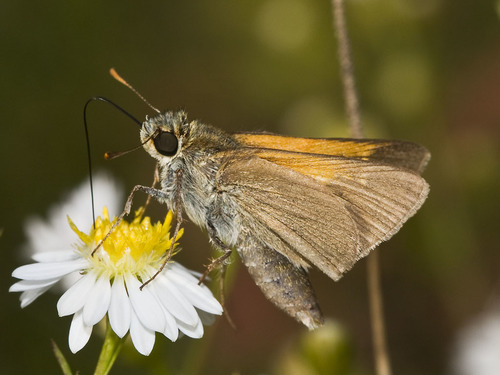
Tawny-edged Skipper
Polites themistocles
A pint-sized dynamo of the backyard, the Tawny-edged Skipper is a master of rapid flight and sun-drenched meadows. Look for its signature orange-bordered wings as it skips gracefully from clover to clover.
Quick Identification
Size
Wingspan of 21–32 mm (0.8–1.25 inches); Length approximately 13–19 mm (0.5–0.75 inches)
Colors
Olive-brown wings with a distinct tawny-orange leading edge on the forewing; males have a black scent patch
Key Features
- Distinctive orange-yellow border on the front edge of the forewing
- Olive-brown underwings without prominent spots
- Small, stout body with large eyes characteristic of skippers
- Male has a long, narrow, slightly curved dark scent patch (stigma) on the upper forewing
When You’ll See Them
Behavior
Males are particularly territorial and will often perch on a prominent blade of grass, waiting to chase off rivals or investigate potential mates that fly into their small domain. They are remarkably hardy and can often be found in suburban backyards that others might find too manicured, provided there are some nectar flowers available. They are generally solitary but can congregate in areas with high-quality nectar sources like clover patches or thistles.
EverydayEarth exclusive
Camera Tips
Lighting is your best ally when filming insects. Place your camera in a location that receives direct, full sun during the midday hours. These skippers are ectothermic and rely on the sun's heat to stay active; they are most likely to remain stationary on a flower or leaf while basking in bright light, which provides the perfect opportunity for a high-detail photograph. If your camera settings allow for it, use a high shutter speed or 'action' mode to freeze their rapid wing beats, as their wings move much faster than larger butterflies like Monarchs.
Beyond flowers, you can lure Tawny-edged Skippers by creating a 'puddling station.' These butterflies often seek out minerals found in damp soil. A shallow dish filled with sand and kept moist with a bit of salt or compost can act as a magnet for skippers. Place your camera right at the edge of this damp patch. This setup often results in longer viewing durations than nectar feeding, as the butterfly will stay still for several minutes to drink, allowing your camera's AI to capture multiple angles of its unique wing markings.
Similar Species
Species that look similar or are commonly confused with Tawny-edged Skipper.
Frequently Asked Questions
Record Tawny-edged Skipper at your habitat
Connect a camera to start building your own species record — AI identifies every visitor automatically.