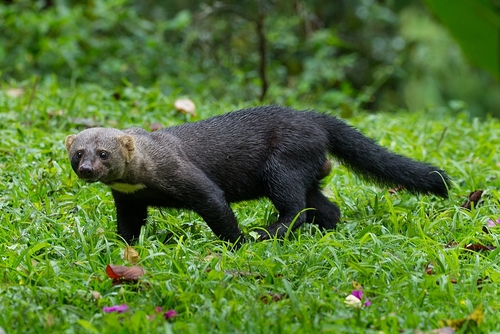
Tayra
Eira barbara
The Tayra is a sleek, acrobatic powerhouse of the tropical forest. With its 'frosted' head and boundless energy, this large relative of the weasel is a master of the canopy and a thrill to capture on camera.
Quick Identification
Size
Total length 90–115 cm (35–45 in); weight 2.7–7 kg (6–15 lbs)
Colors
Dark brown or black body with a contrasting light gray or tan head and neck; most possess a yellow or orange diamond-shaped patch on the throat.
Key Features
- Elongated, muscular weasel-like body with a long bushy tail
- Light gray or tan 'frosting' on the head and neck
- Distinctive yellow or white triangular throat patch
- Large, powerful paws with non-retractable claws for climbing
When You’ll See Them
Behavior
While they are mostly solitary hunters, it is not uncommon to see a mother with her young or a breeding pair patrolling their territory together. They are highly intelligent and possess a keen sense of smell and hearing, which they use to navigate the forest floor and canopy alike. In areas where they feel safe, they exhibit a playful and curious nature, often investigating hollow logs or tossing fruit before consuming it.
EverydayEarth exclusive
Camera Tips
Because Tayras are primarily diurnal, you should prioritize high-resolution daylight settings on your trail camera. Position your camera along 'ecotones'—the transition zones where dense forest meets a garden, orchard, or clearing. They are master climbers, so don’t just focus on the ground; mounting a camera 5-6 feet up a tree trunk overlooking a known fruit-bearing tree or a fallen log can yield spectacular footage of them descending head-first or navigating the mid-canopy.
If you want to draw a Tayra into your camera's field of view, scent is your most effective tool. They have an incredible sense of smell and are particularly attracted to the aroma of overripe fruit or honey. Smearing a small amount of honey or molasses on a textured log (out of direct reach of ants if possible) can keep them occupied in front of the lens for several minutes, allowing for high-quality video captures. Avoid placing bait directly on the ground; instead, place it on a raised stump or branch to encourage them to show off their characteristic climbing posture.
Pay close attention to the lighting and background of your setup. Since Tayras have dark fur, they can easily 'blob out' and lose detail against dark shadows or dense foliage. Try to angle your camera so the background is slightly lighter or more open, allowing their silhouette and that iconic yellow throat patch to pop. Use a fast trigger speed (0.3s or less) because these animals are constantly on the move. If you are in a region with a distinct dry season, a small, shallow water basin is an irresistible draw for a thirsty Tayra, often resulting in playful 'bath time' footage.
Similar Species
Species that look similar or are commonly confused with Tayra.
Greater Grison
Smaller with shorter legs and a very distinct white stripe running across the forehead and ears.
Jaguarundi
A wild cat with a similar uniform coat but featuring a feline face, shorter ears, and a different walking gait.
Bush Dog
Much shorter, stouter build with a very short tail and dog-like facial features.
Frequently Asked Questions
Record Tayra at your habitat
Connect a camera to start building your own species record — AI identifies every visitor automatically.