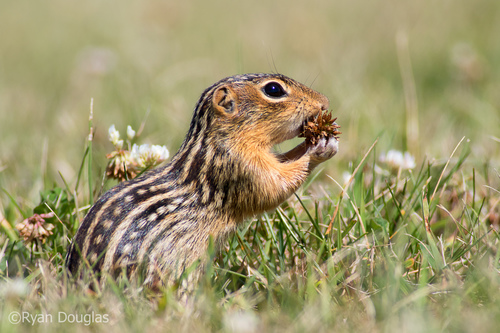
Thirteen-lined Ground Squirrel
Ictidomys tridecemlineatus
Meet the prairie’s most stylish speedster, the Thirteen-lined Ground Squirrel. With its intricate racing stripes and alert 'picket-pin' stance, this burrowing mammal is a master of the short-grass plains.
Quick Identification
Size
Length: 17-31 cm (7-12 in); Weight: 110-270 g (4-9.5 oz)
Colors
Tan to dark brown base with 13 alternating lines of solid white/buff and rows of light spots; belly is creamy white
Key Features
- 13 distinct stripes running from neck to rump
- Rows of light-colored spots within the dark stripes
- Slender, cylindrical body with a relatively short, thin tail
- Large eyes and small, recessed ears for a streamlined profile
When You’ll See Them
Behavior
The Thirteen-lined Ground Squirrel is a quintessential prairie dweller, often seen standing bolt upright like a small 'picket pin' to survey its surroundings. They are primarily solitary and spend a significant portion of their lives underground in complex burrow systems. Unlike many other squirrels, they are true hibernators, disappearing into their burrows in late summer or early autumn and not emerging until the spring thaw.
When above ground, they are highly alert and remarkably fast, darting between foraging spots with a low-profile run. They communicate with high-pitched chirps or trills, which has earned them the nickname 'squinny' in some regions. While they are generally shy around humans, they adapt well to manicured environments like suburban lawns, golf courses, and cemeteries where the short grass allows them to spot predators from a distance.
EverydayEarth exclusive
Camera Tips
To capture these 'striped gophers' on camera, placement is everything. Because they are low-slung and rarely climb, your camera must be positioned just a few inches off the ground. Mounting the camera on a small tripod or a low stake is better than a tree trunk. Aiming the lens at a slight upward angle can create a dramatic, intimate look at their foraging behavior. Look for their burrow entrances—clean, 2-inch wide holes without a mound of dirt—and set your camera about 3-5 feet away to ensure they are in focus when they emerge.
Since these squirrels are most active during the warmest, brightest parts of the day, choose a spot with good natural lighting. Avoid heavy shade, as the camera's shutter speed might slow down, resulting in motion blur when the squirrel darts away. If you are struggling to get them to pause for a photo, a small handful of black oil sunflower seeds or a smear of peanut butter on a flat stone can act as an irresistible 'photo op' station. They are particularly attracted to areas where the grass is kept short, so a freshly mowed patch of yard is often the best stage for your camera setup.
In terms of settings, a fast trigger speed (0.2 seconds or less) is vital because these squirrels are incredibly twitchy and fast. If your camera supports 'Burst Mode,' set it to take 3-5 photos per trigger to catch that perfect moment when they stand on their hind legs to scout. For video, a high frame rate will allow you to capture their rapid movements smoothly. Remember that they are true hibernators and disappear early—sometimes as soon as late August for adult males—so plan your camera deployments for the heat of June and July for the best results.
Similar Species
Species that look similar or are commonly confused with Thirteen-lined Ground Squirrel.
Frequently Asked Questions
Record Thirteen-lined Ground Squirrel at your habitat
Connect a camera to start building your own species record — AI identifies every visitor automatically.