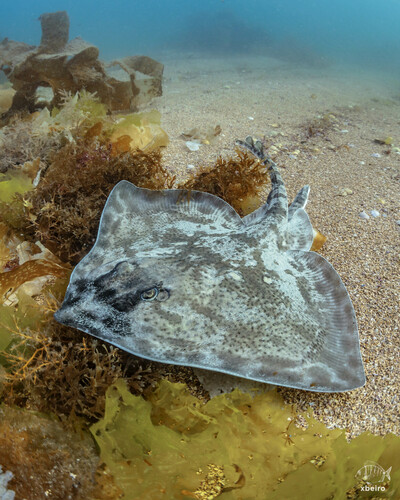
Thornback Skate
Raja clavata
The most common skate in European waters, the Thornback Skate is a prehistoric-looking marvel of the shallows. With its signature 'thorns' and kite-like wings, it transforms the sandy seafloor into a theater of graceful, hidden movement.
Quick Identification
Size
Disc width typically up to 85 cm (33 inches), with a total length reaching 1 meter (3.3 feet); weight ranges from 2 to 4 kg (4.4 to 8.8 lbs).
Colors
Mottled brownish-grey upper surface with dark spots and small yellow patches; underside is creamy white with greyish edges.
Key Features
- Kite-shaped body with a short, pointed snout
- Large, hook-like 'thorns' or dermal denticles along the spine and tail
- Mottled camouflage pattern on the upper disc
- Long, slender tail that is roughly equal to the body length
When You’ll See Them
Behavior
The Thornback Skate is a master of the seabed, spending much of its day partially buried in sand or fine gravel to avoid predators. While they appear sedentary, they are highly capable swimmers that move with a graceful, undulating 'wing' motion. They are generally solitary but may congregate in higher densities during the breeding season when they migrate from deeper offshore waters into shallower coastal bays.
These skates are primarily nocturnal hunters, using sensitive electro-receptors in their snouts to detect the tiny electrical pulses of hidden prey. When interacting with humans, they are docile and shy, though their thorny skin can cause abrasions if handled. They are famous for producing 'mermaid's purses'—tough, leathery egg cases with four long horns—which are frequently found washed up on beaches after the young have hatched.
EverydayEarth exclusive
Camera Tips
Capturing a Thornback Skate requires an underwater setup, such as an action camera in a waterproof housing or a specialized underwater trail camera. For the best results, place your camera on a flat, sandy patch near the edge of a rocky reef or pier piling. Use a weighted baseplate or a small tripod to ensure the camera sits flush with the seabed, angled slightly upward to capture the skate as it glides over the sand.
Because these fish are nocturnal, integrated infrared (IR) LEDs are essential for night recording. To attract a skate to your camera's field of view, use a 'scent station' rather than a traditional feeder. Place a mesh bag filled with oily fish scraps (like mackerel or sardines) about two feet in front of the lens. The scent will travel with the current, drawing the skate in to investigate. Ensure the bait bag is securely anchored so a larger skate or crab doesn't drag it out of frame.
Timing is everything when filming marine life. Aim for the spring and early summer months when Thornback Skates move into shallow water (often less than 10 meters deep) to lay their egg cases. During this window, you have the highest probability of catching a female depositing a mermaid's purse or a male patrolling the area for mates. Check tide tables and aim to deploy your camera during a rising tide when fish are most active.
Set your camera to record short video clips (15-30 seconds) rather than still photos. The movement of a skate is its most captivating feature, and a still image may blend too perfectly with the sand due to their expert camouflage. If your camera allows, use a high ISO setting for better low-light performance, but be mindful of the 'backscatter' effect where the camera's light reflects off particles in the water.
Frequently Asked Questions
Record Thornback Skate at your habitat
Connect a camera to start building your own species record — AI identifies every visitor automatically.