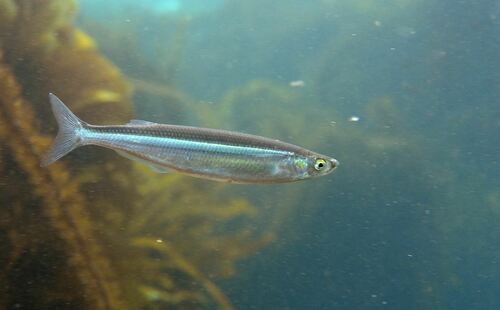
Topsmelt Silverside
Atherinops affinis
The shimmering acrobat of the Pacific shallows, the Topsmelt Silverside brings a flash of brilliant silver to coastal estuaries and kelp forests. A vital part of the marine ecosystem, these schooling beauties are a favorite for underwater camera enthusiasts.
Quick Identification
Size
6 to 14.5 inches (15–37 cm) in length; typically weighing 0.5 to 1 lb (0.2–0.45 kg).
Colors
Silvery-green or blue on the back with a brilliant, wide silver stripe along the flank; white or pale silver belly; fins often exhibit a translucent or yellowish hue.
Key Features
- Broad silver band running horizontally along the side
- Two separate dorsal fins on the back
- Pointed snout with a small, terminal mouth
- Slender, streamlined 'silverside' body shape
When You’ll See Them
Behavior
Topsmelt are energetic, schooling fish that are a hallmark of the Pacific coastline. They are most frequently observed in large, shimmering groups near the surface of the water, a strategy that helps protect them from predators while they forage for food. These schools can consist of hundreds of individuals, moving in synchronized patterns that create a dazzling display of reflected light.
During the spawning season, which typically occurs from spring through late summer, Topsmelt migrate into the shallow, calmer waters of estuaries, bays, and even tidal sloughs. Here, they attach their eggs to eelgrass or submerged vegetation using sticky filaments. They are relatively hardy fish, capable of tolerating wide ranges of salinity, which allows them to thrive in environments where other marine species might struggle.
EverydayEarth exclusive
Camera Tips
To capture high-quality footage of Topsmelt Silversides, you will need an underwater camera setup, such as a GoPro in a waterproof housing or a dedicated submerged 'drop-cam.' Since these fish are surface-dwellers, the best placement for your camera is 1 to 3 feet below the water line. If you have access to a private dock or pier, mounting the camera to a piling or suspending it from a weighted line is highly effective. Angle the lens slightly upward toward the surface to catch the 'silverside' flash as they swim through the sunlight.
Lighting is the most critical factor for these metallic fish. Aim to record during peak daylight hours, typically between 10 AM and 2 PM, when the sun is directly overhead. The bright light penetrates the water column and makes their silver lateral stripes pop against the blue-green water. Avoid using artificial lights if possible, as the glare can wash out their reflective scales and may spook the school. In murkier estuarine water, high-contrast settings on your camera can help define their silhouettes.
While you shouldn't 'bait' the water in a traditional sense, placing your camera near structures with heavy algae growth or barnacles—like a boat slip or a kelp bed—naturally attracts Topsmelt. They are curious but easily startled by sudden movement. If you are using a trail-style underwater camera, ensure it is tethered securely to prevent it from swaying in the current, as a stable frame is necessary for the AI to correctly identify the fast-moving school. In the spring, focus your efforts on areas with submerged vegetation where spawning activity is highest.
Similar Species
Species that look similar or are commonly confused with Topsmelt Silverside.
Frequently Asked Questions
Record Topsmelt Silverside at your habitat
Connect a camera to start building your own species record — AI identifies every visitor automatically.