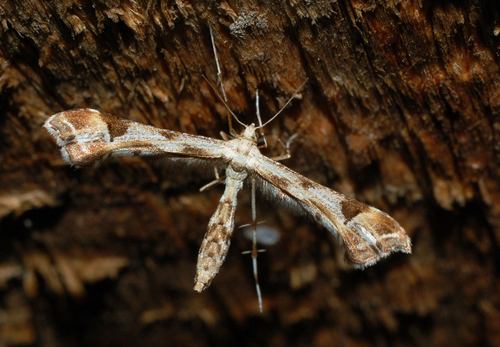
Triangle Plume Moth
Platyptilia gonodactyla
With wings like feathery fans and a silhouette like a tiny aircraft, the Triangle Plume Moth is one of the most architectural insects in the temperate world. Keep an eye out for its distinctive 'T' shape resting on garden foliage at dusk.
Quick Identification
Size
Wingspan of 18–30 mm (0.7–1.2 inches); body length approximately 12–15 mm (0.5 inches)
Colors
Pale ochreous to warm brown forewings featuring a distinctive dark brown or blackish triangular mark on the leading edge (costa); hindwings are grayish-brown and deeply lobed.
Key Features
- Distinctive T-shaped resting posture with wings held perpendicular to the body
- Prominent dark triangular blotch near the wing tip
- Wings divided into feathery 'plumes' characteristic of Pterophoridae
- Long, spindly legs often trailing behind during rest
When You’ll See Them
Geographic range
Where Does the Triangle Plume Moth Live?
The Triangle Plume Moth is a widespread resident across the temperate regions of Europe and Asia. Its core range extends from the British Isles and Western Europe through Central Russia and into parts of temperate East Asia, following the distribution of its preferred host plants. While it thrives in the cool, moist climates of Northern and Central Europe, it can also be found in Mediterranean regions where suitable damp micro-habitats exist.
Basemap © OpenStreetMap contributors
Behavior
The Triangle Plume Moth is a fascinating nocturnal insect best known for its peculiar resting position. Unlike most moths that fold their wings over their backs, this species holds its narrow wings out at right angles to its body, forming a rigid 'T' shape. This silhouette, combined with its mottled brown coloring, allows it to blend seamlessly into dried vegetation and twigs during the day, effectively hiding from predators like birds and spiders.
This moth is closely tied to the life cycle of the Coltsfoot plant. It typically produces two generations per year; the first brood appears in late spring, while the second emerges in late summer. While they are primarily active from dusk through the night, they are easily disturbed from tall grass or foliage during the day, making them a common sight for gardeners and hikers in temperate regions.
EverydayEarth exclusive
Camera Tips
Capturing the Triangle Plume Moth on a backyard camera requires a focus on micro-habitats. Because these moths are small and have a unique silhouette, you should position your camera with a macro lens or a close-focus setting (within 12-24 inches) near patches of Coltsfoot or tall, unmown grass. Since they are attracted to light, setting up your camera near a low-intensity UV light source or a porch light can dramatically increase your chances of a 'visit' to your recording station.
For the best identification shots, aim the camera horizontally at the level of flower heads or sturdy grass stems. The Triangle Plume Moth frequently rests on vertical stalks, so a side-on angle will capture that iconic 'T' shape and the dark triangular markings on the wings. If your AI camera has a 'small animal' or 'insect' trigger mode, ensure it is set to high sensitivity to pick up their delicate, fluttering flight patterns.
Seasonality is key for this species. Set your gear out during the 'two peaks'—late May and again in mid-August. On warm, still nights, these moths are very active. If you are using a trail camera, look for models with a high-resolution nighttime mode (Infrared or 'No Glow') to avoid washing out the subtle brown patterns on their wings with a harsh white flash. A shutter speed fast enough to freeze their slow, somewhat clumsy flight can result in spectacular 'action' shots as they approach a light source.
Frequently Asked Questions
Record Triangle Plume Moth at your habitat
Connect a camera to start building your own species record — AI identifies every visitor automatically.