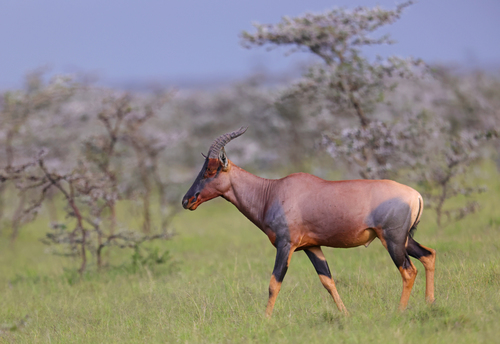
Tsessebe
Damaliscus lunatus
Discover the Tsessebe, Africa's fastest antelope, known for its incredible stamina and unique purplish-chestnut coat. A master of the open plains, this social grazer is a spectacular find for any wildlife photographer.
Quick Identification
Size
Height at shoulder 115-125 cm (45-49 inches); weight ranges from 120-160 kg (265-350 lbs).
Colors
Rich reddish-brown to chestnut coat with a distinct iridescent purplish sheen; blackish-blue patches on the face, shoulders, and thighs.
Key Features
- Crescent-shaped horns with prominent rings
- Sloping back with high shoulders and lower rump
- Dark black facial blaze
- Glossy purplish coat sheen visible in sunlight
When You’ll See Them
Behavior
The Tsessebe holds the title of the fastest antelope in Africa, capable of reaching sustained speeds of over 90 km/h (56 mph). They are highly social and are typically seen in small family groups consisting of a dominant male, several females, and their offspring. Their most recognizable social behavior is the 'sentinel' stance, where one individual—often the territorial male—will stand atop a termite mound or high ground to scan for predators while the rest of the herd grazes.
These animals are generally docile but can be intensely territorial. Males use a variety of displays to mark their ground, including rubbing their scent glands on the earth and standing in 'proud' postures on elevated spots. While they are wary of predators like lions and hyenas, their incredible speed and stamina usually allow them to outrun almost any threat on the open savanna.
EverydayEarth exclusive
Camera Tips
To capture the perfect shot of a Tsessebe, focus on their habit of seeking high ground. If your property or trail has termite mounds or small hills, position your camera to face these elevations. Males frequently use these spots as lookout points. Mount your camera at a height of about 3 to 4 feet and angle it slightly upward to capture their full profile and majestic horns against the sky. This 'low-angle' approach emphasizes their powerful build and unique sloping silhouette.
Because the Tsessebe is remarkably fast, your camera's trigger speed is paramount. A delay of even half a second can result in a photo of a disappearing tail. Use a camera with a trigger speed of 0.3 seconds or faster and set it to 'Burst Mode' or 'Multi-Shot.' This ensures that if the animal is running or moving quickly across the frame, you get at least one crisp, centered image. High-speed shutter settings are also recommended to avoid motion blur during their energetic morning displays.
Lighting is your best friend when it comes to this species. The Tsessebe’s coat has a unique iridescent sheen that looks purplish or even blue in the right light. Position your camera facing north or south to avoid direct lens flare, allowing the early morning or late afternoon sun to hit the animal from the side. This side-lighting will make the metallic colors of their fur pop in your photos. During the dry season, placing cameras near permanent water troughs or natural pans is a guaranteed way to see them, as they rarely stray more than a few kilometers from a reliable drink.
Frequently Asked Questions
Record Tsessebe at your habitat
Connect a camera to start building your own species record — AI identifies every visitor automatically.