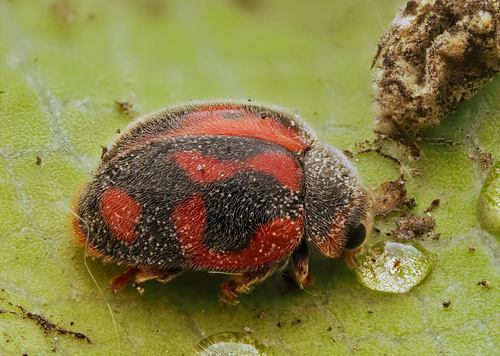
Vedalia Beetle
Novius cardinalis
The tiny red hero of the citrus grove, the Vedalia Beetle is a master hunter that saved California's orange industry. This striking ladybird is a testament to the power of natural pest control in our own backyards.
Quick Identification
Size
2-4 mm (0.08-0.16 inches) in length
Colors
Bright cardinal red with irregular black markings; the black pattern typically includes a patch around the base of the wings and several large, blotchy spots.
Key Features
- Hemispherical, dome-shaped body
- Deep cardinal red elytra with wavy black markings
- Surface covered in fine, short greyish hairs
- Short, club-shaped antennae
When You’ll See Them
Geographic range
Where Does the Vedalia Beetle Live?
Originally native to the Australian continent, the Vedalia Beetle has been distributed worldwide by humans to serve as a natural guardian of citrus crops. It has established permanent, self-sustaining populations across the United States (particularly California and Florida), the Mediterranean basin, North Africa, and various tropical regions in Asia and South America. In any region with a mild climate where citrus or its host plants grow, this tiny red traveler can likely be found hard at work.
Basemap © OpenStreetMap contributors
Behavior
The Vedalia Beetle is a specialized predator known for its extraordinary focus on a single prey source: the cottony cushion scale. Unlike many other ladybugs that may supplement their diet with pollen or nectar, both the larvae and adults of this species are strictly carnivorous. They spend their daylight hours patrolling the stems and leaves of host plants, moving with a deliberate and methodical pace as they search for the distinctive white, waxy egg sacs of their prey.
In terms of social behavior, they are largely solitary but will congregate in high numbers wherever an infestation of scale insects is present. They are famous in the world of entomology for being the first major success story in biological pest control; when citrus groves in California were failing in the late 1800s, these beetles were introduced to save them. They are harmless to humans and do not bite or sting, though they may secrete a pungent yellow fluid from their joints if handled roughly, a defensive tactic known as reflex bleeding.
EverydayEarth exclusive
Camera Tips
Because the Vedalia Beetle is exceptionally small, capturing high-quality images with a standard backyard camera requires a specialized setup. For the best results, use a macro lens attachment or position your AI-powered camera as close as the minimum focal distance allows—often just a few inches from the target. Focus your efforts on the underside of leaves or along the woody stems of citrus trees, specifically looking for the white, ribbed 'cotton' masses of scale insects, which act as a natural magnet for these beetles.
Lighting is crucial for revealing the beetle's deep red color. Aim for bright, indirect light; the midday sun can cause harsh highlights on their slightly curved wing covers, while deep shade may make them appear dark and indistinguishable from the bark. Positioning your camera on the east-facing side of a tree can capture great activity during the warming morning hours when the beetles begin their hunt.
Avoid using any chemical pesticides in the area you are monitoring, as Vedalia Beetles are highly sensitive to residues. If you want to encourage them to stay in view of your camera, ensure there is a water source nearby, such as a shallow bee-bath with pebbles. Since they are most active when temperatures are between 70°F and 90°F (21°C - 32°C), set your camera's sensitivity to high during these peak windows to ensure you don't miss their relatively fast crawling movements.
Similar Species
Species that look similar or are commonly confused with Vedalia Beetle.
Frequently Asked Questions
Record Vedalia Beetle at your habitat
Connect a camera to start building your own species record — AI identifies every visitor automatically.