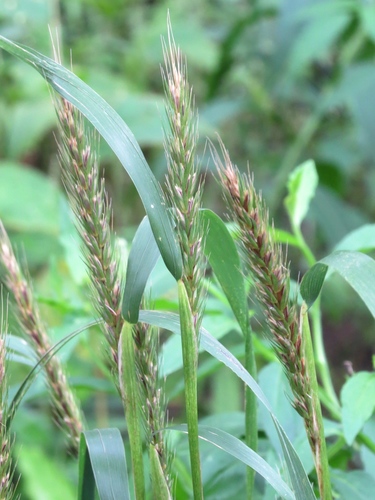
Virginia wildrye
Elymus virginicus
A resilient native bunchgrass that brings year-round texture and vital winter forage to your backyard. Known for its elegant, upright seed spikes, Virginia wildrye is a cool-season hero for birds and local wildlife alike.
Quick Identification
Size
2 to 4 feet (60 to 120 cm) tall; seed spikes range from 2 to 6 inches (5 to 15 cm) in length.
Colors
Bright waxy green during spring; maturing to a golden straw-tan or pale brown in late summer.
Key Features
- Upright, bristly seed spikes
- Clump-forming bunchgrass habit
- Short, straight bristles (awns)
- Waxy, bluish-green leaf blades
When You’ll See Them
Behavior
In a backyard setting, this grass acts as a living pantry. While it is wind-pollinated and doesn't require bees for reproduction, its structural presence attracts a variety of insects and the birds that hunt them. Its seeds are a high-energy food source for songbirds and small mammals during the transition into winter, making it a hub of activity for backyard wildlife enthusiasts.
EverydayEarth exclusive
Camera Tips
To truly document the life of this grass, use a time-lapse mode. Set your camera to take one photo every hour during the peak growing months of May and June. This allows you to visualize the rapid vertical growth and the eventual 'nodding' of the seed heads as they fill with grain. If your camera supports high-definition video, aim for a day with a light breeze; the rhythmic swaying of Virginia wildrye creates a peaceful, cinematic effect that serves as a beautiful backdrop for your backyard wildlife footage.
Lighting is your best friend when photographing grasses. Aim for 'backlighting'—position the camera so the sun is behind the grass, pointing toward your lens (but shielded from direct glare). This will cause the awns and seed heads to glow, highlighting the fine hairs and structures that distinguish it from common lawn grass. Early morning or late afternoon light (the Golden Hour) provides the best results, as the warm tones complement the straw-colored mature seeds.
Don't forget the visitors! Because this grass is a magnet for wildlife, place your camera near a well-established clump to capture 'foraging events.' Small birds like sparrows and finches will often perch directly on the sturdy stems to reach the seeds. If you are tracking mammals, Virginia wildrye is a favorite snack for deer; a camera placed at a 45-degree angle to the plant can capture grazing behavior without the foliage blocking the animal's face.
Similar Species
Species that look similar or are commonly confused with Virginia wildrye.
Frequently Asked Questions
Record Virginia wildrye at your habitat
Connect a camera to start building your own species record — AI identifies every visitor automatically.