Water Deer
Hydropotes inermis
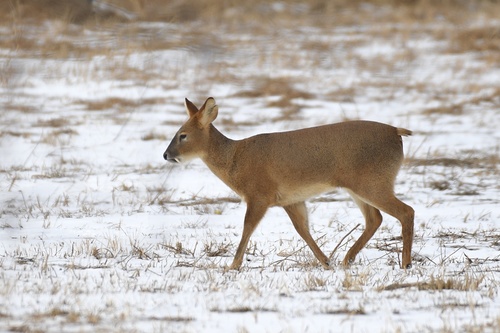
With their endearing rounded ears and unusual 'vampire' tusks, Water Deer are one of the most distinctive mammals you can find near wetlands. These antlerless wonders offer a rare look at a primitive deer lineage that has remained largely unchanged for millions of years.
Quick Identification
Size
75–100 cm (30–39 in) in length; 45–55 cm (18–22 in) shoulder height; weight 9–14 kg (20–31 lbs)
Colors
Golden-brown coat in summer, turning a thick, coarse grey-brown in winter; pale cream underbelly; black nose and dark, large eyes
Key Features
- Large, rounded ears with white interiors
- Protruding downward-curving tusks (canines) in males
- Sloping profile with the rump higher than the shoulders
- Complete lack of antlers on both sexes
- Short, barely visible tail
When You’ll See Them
Behavior
One of their most fascinating traits is their affinity for water; they are proficient swimmers and are often found in marshy areas or reed beds where other deer might struggle to navigate. While shy around humans, they are bold within their own territories. During the winter rut, males can become quite aggressive, using their sharp tusks to spar with rivals, which often results in visible scarring on the ears and flanks.
EverydayEarth exclusive
Camera Tips
To capture the best footage of Water Deer, you need to account for their small stature. Unlike larger deer species, Water Deer stand only about 20 inches high at the shoulder, so mount your camera low—about 18 inches (45 cm) off the ground—to get a level, eye-to-eye perspective. If the camera is too high, you’ll likely only see the top of their backs or miss their distinctive tusks entirely. Look for 'runs' or narrow paths through reed beds or tall grass near water sources where the vegetation is slightly flattened.
Because they are most active during the low-light hours of dawn and dusk, use a camera with high-quality night vision or a 'No-Glow' infrared flash. Water Deer are notoriously skittish and can be spooked by the faint red glow of standard IR LEDs. A high-speed trigger is essential (0.3 seconds or faster), as they move quickly and often leap when they transition from cover to open ground. Setting your camera to 'Burst Mode' or a 15-second video clip is the best way to see the tusks, which can be hard to spot in a single still photo.
While they aren't easily lured by typical baits, providing a clean, accessible water source or a salt lick in a quiet corner of your property can encourage them to linger. In the winter months, when food is scarce, they may be drawn to patches of fresh clover or spilled grain. Position your camera so it faces North or South to avoid sun flare during their peak activity hours at sunrise and sunset, ensuring your images are crisp and well-exposed.
Frequently Asked Questions
Record Water Deer at your habitat
Connect a camera to start building your own species record — AI identifies every visitor automatically.