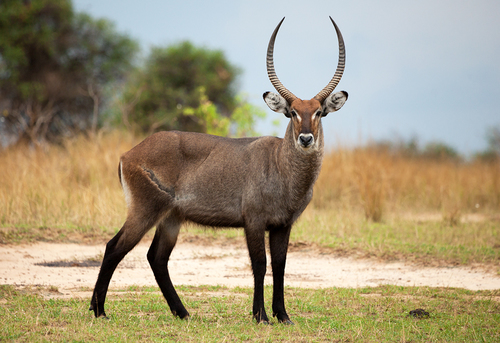
Waterbuck
Kobus ellipsiprymnus
The Waterbuck is a robust and regal antelope known for its shaggy coat and its inseparable bond with African waterways. Easily identified by the iconic white ring on its rump, this resilient grazer is a favorite for trail camera enthusiasts across the savanna.
Quick Identification
Size
Shoulder height 120-136 cm (47-54 in); Weight 160-262 kg (350-580 lbs)
Colors
Coarse, shaggy coat in grizzled grey to reddish-brown; white markings on the throat, muzzle, and above the eyes; white ring or patch on the rump.
Key Features
- Distinctive white 'toilet seat' ring or solid white patch on the rump
- Shaggy, oily coat that appears coarse and thick
- Large, rounded ears with white fringes
- Long, forward-curving spiral horns on males only
When You’ll See Them
Sightings on EverydayEarth
May 24, 2026
Two waterbucks are grazing in a lush, green clearing. The individual on the left moves slowly across the grass, clearly displaying the characteristic white ring on its hindquarters, while a second individual grazes quietly in the shade of a large tree in the background.
May 5, 2026
Two Waterbucks are visible on the far bank of the river, grazing among the tall grass. One stands near the water's edge, occasionally turning its head to scan the area, while the other remains partially obscured in the vegetation higher up the bank. The animals appear calm despite the steady wind blowing through the trees.
Behavior
Waterbuck are highly social and water-dependent antelopes that rarely venture more than a mile from a permanent water source. They are typically found in small, loose herds of females and their young, while mature males maintain large territories that overlap with several female groups. These territories are fiercely defended, especially those with the best access to water and high-quality grazing land.
One of the most fascinating aspects of Waterbuck behavior is their use of scent. They possess specialized glands that secrete a musky, oily substance across their coat. This oil serves as a magnificent waterproof layer, which is essential for a species that frequently retreats into deep water to escape predators like lions or hyenas. While they are not the fastest runners, they are strong swimmers and will often stand neck-deep in water when threatened.
EverydayEarth exclusive
Camera Tips
To capture high-quality footage of a Waterbuck, your primary focus should be the 'water-to-woodland' transition zone. These animals follow very predictable paths between their grazing grounds and their favorite drinking spots. Position your camera about 3 to 4 feet off the ground—higher than you would for a bushbuck—to ensure you capture the full height of the males' impressive horns. Angle the camera toward a clearing near a water source where the light is consistent, as their dark, shaggy coats can sometimes lose detail in deep shadows or harsh midday sun.
Because Waterbuck are quite sensitive to movement and foreign objects, it is vital to use a 'no-glow' or black LED infrared flash for nighttime captures. White light or traditional red-glow IR can startle them, causing them to bolt before you get a clear shot. If your camera supports it, use a high-speed trigger and a multi-shot burst mode. Waterbuck often travel in 'follow-the-leader' lines; the first trigger might catch the lead female, but the burst will capture the calves and the territorial male bringing up the rear.
During the dry season, Waterbuck become much more concentrated around remaining water holes, making this the best time for high-traffic captures. Avoid using food lures, which are often ignored by these dedicated grazers; instead, focus on natural bottlenecks like a break in a fence line or a worn path through tall grass. If you are lucky enough to have a camera near a muddy bank, look for their large, splayed hoof prints to find the perfect placement spot. Lastly, keep your lens clean; the musky oils they leave behind if they sniff the camera can smudge the glass and ruin subsequent shots.
Similar Species
Species that look similar or are commonly confused with Waterbuck.
Frequently Asked Questions
Record Waterbuck at your habitat
Connect a camera to start building your own species record — AI identifies every visitor automatically.