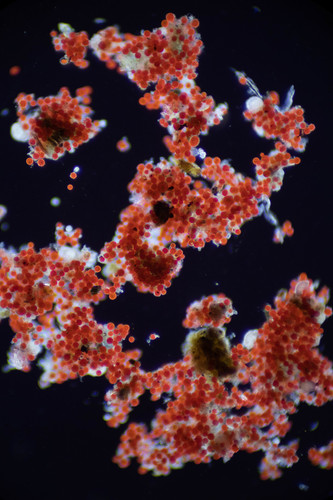
watermelon snow
Chlamydomonas nivalis
Transforming pristine white peaks into shades of rose and crimson, watermelon snow is a microscopic marvel that thrives where others freeze. This unique 'snow algae' uses built-in sunscreen to survive the harshest alpine sun.
Quick Identification
Size
Individual cells are microscopic (20-30 micrometers), but colonies form visible patches covering several square meters.
Colors
Vibrant pink to blood-red hues; occasionally green in early growth stages or deep within snow layers.
Key Features
- Distinctive pink or reddish staining on alpine snow
- Faint, sweet scent similar to watermelon when crushed
- Found exclusively in freezing meltwater and snowpacks
- Visible only during spring and summer melt seasons
When You’ll See Them
Geographic range
Where Does the watermelon snow Live?
Watermelon snow is a true global citizen of the cold, found on every continent where permanent or semi-permanent snowfields exist. It is most commonly documented in the high mountain ranges of North America, such as the Sierra Nevada and the Rockies, as well as the European Alps and the Himalayas. Beyond these mountain peaks, it maintains a massive presence across the polar regions of Antarctica and the Arctic reaches of Greenland and Northern Canada.
Basemap © OpenStreetMap contributors
Behavior
Watermelon snow is a fascinating survivalist of the microbial world. Unlike most plants and algae that perish in freezing temperatures, Chlamydomonas nivalis is cryophilic, meaning it thrives in the cold. During the winter, these organisms remain dormant and buried deep beneath the snow as thick-walled resting spores. As the sun strengthens in the spring and liquid water begins to percolate through the snowpack, the spores germinate, developing tiny tail-like flagella that allow them to swim upward toward the surface light.
Once they reach the sun-drenched surface, the algae lose their mobility and transition into a stationary phase. To protect their delicate DNA from the intense high-altitude ultraviolet radiation, they produce a secondary red pigment called astaxanthin. This pigment acts as a biological sunscreen, turning the snow various shades of pink and red. This color change also lowers the snow's albedo, causing it to absorb more heat and melt faster, which provides the algae with the liquid water they need to thrive.
EverydayEarth exclusive
Camera Tips
Capturing watermelon snow on a trail or backyard camera requires a different approach than filming wildlife, as you are essentially filming a slow-motion 'bloom.' The best method is to use a time-lapse setting. Secure your camera to a fixed point, such as a sturdy rock or a high-altitude post, and aim it at a north-facing snowbank that receives direct sunlight. Set the interval to take one photo every 1-2 hours during daylight. Over the course of a week, you will see the white snow miraculously blush into a deep pink.
Because the algae thrive on sunlight, placement is everything. Look for areas where the snow is slightly compressed—such as old footprints or sun cups—as the algae often concentrate in these depressions where meltwater pools. Angle the camera downward at roughly 45 degrees to capture the texture of the snow. Be sure to use a camera with high-quality white balance settings; otherwise, the bright snow may 'wash out' and the pink hues will appear muddy or grey in the final image.
If you are using an AI-powered camera like those featured on EverydayEarth, be aware that the movement of the melting snowpack can sometimes trigger false motion alerts. To avoid this, use a camera that allows you to set specific 'activity zones' on stable ground nearby, or rely entirely on the time-lapse function. Since these blooms occur in cold environments, ensure your camera is equipped with lithium batteries, which perform significantly better in near-freezing temperatures than standard alkaline ones.
Similar Species
Species that look similar or are commonly confused with watermelon snow.
Frequently Asked Questions
Record watermelon snow at your habitat
Connect a camera to start building your own species record — AI identifies every visitor automatically.