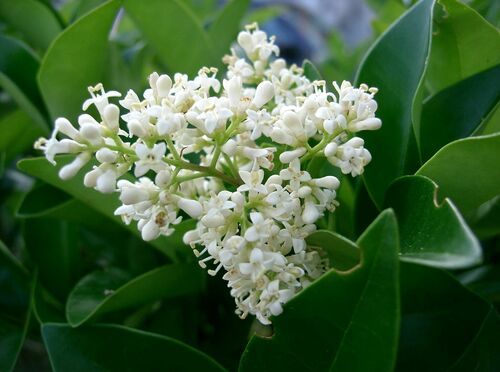
wax-leaf ligustrum
Ligustrum japonicum
A champion of backyard privacy, the wax-leaf ligustrum is more than just a hedge; it's a year-round sanctuary for birds and a fragrant feast for pollinators. Its waxy, evergreen leaves provide a lush backdrop for the vibrant life cycles of the suburban garden.
Quick Identification
Size
Typically reaches 6–15 feet (1.8–4.5 m) in height and spread, though can grow up to 20 feet (6 m) in ideal conditions.
Colors
Glossy, deep emerald green leaves; creamy white flowers; dark purple to black berries.
Key Features
- Thick, waxy leathery leaves with smooth margins
- Opposite leaf arrangement on stems
- Dense clusters of fragrant, four-petaled white flowers
- Small, oblong dark purple-black berries
- Smooth, light gray-brown bark
When You’ll See Them
Behavior
The wax-leaf ligustrum, also known as Japanese privet, is a hardy evergreen shrub characterized by its rapid growth and dense, bushy habit. In the suburban landscape, it is most often utilized as a 'living fence' or privacy screen due to its thick foliage that remains green year-round. While it may appear stationary, it is a dynamic participant in the backyard ecosystem, particularly during its blooming and fruiting cycles.
In late spring and early summer, the shrub produces large, conical clusters of flowers that emit a heavy, sweet fragrance, often drawing in a wide variety of pollinators. As an introduced species in North America, it is highly adaptable and can sometimes become aggressive, spreading into nearby woodlands via bird-dispersed seeds. Despite its invasive tendencies in some regions, it provides significant structural cover for small mammals and nesting sites for songbirds.
EverydayEarth exclusive
Camera Tips
To capture the best images of wax-leaf ligustrum, focus on its role as a hub for other wildlife. During the late spring blooming period (usually May or June), mount your camera on a tripod or fence post at the same height as the flower panicles. Using a macro lens or a close-focus setting will allow you to capture the intricate details of the tiny blossoms and the diverse array of bees, butterflies, and hoverflies that visit them for nectar. Early morning light is ideal, as it highlights the dew on the waxy leaves without creating the harsh, reflective glare that midday sun often produces on the glossy surfaces.
In the winter months, this plant becomes a prime location for bird photography. The dark purple berries are a staple for cedar waxwings, robins, and mockingbirds. Position your camera approximately 5 to 8 feet away from a heavy cluster of berries. To avoid 'false triggers' from wind-blown branches, increase the sensitivity of your AI detection to specifically look for movement within the berry zones. A slightly downward angle can help separate the subject from the dense green background, making the colors of the visiting birds pop against the dark foliage.
If you are looking to document nesting behavior, the interior of a mature wax-leaf ligustrum is a favorite spot for northern cardinals and mockingbirds. Place your camera near the outer 'entry' branches of the shrub rather than deep inside, as the dense foliage can block infrared sensors and lead to dark, unusable footage. Ensure your camera is set to a high frame rate to catch the quick movements of birds darting in and out of the thicket. For those interested in time-lapse photography, this species is an excellent subject for documenting the transition from white floral clusters to green berries, and finally to the deep purple fruit of winter.
Similar Species
Species that look similar or are commonly confused with wax-leaf ligustrum.
Frequently Asked Questions
Record wax-leaf ligustrum at your habitat
Connect a camera to start building your own species record — AI identifies every visitor automatically.