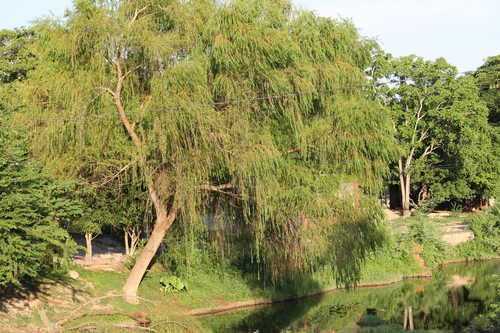
weeping willow
Salix babylonica
With its iconic cascading branches and elegant silhouette, the weeping willow is the crown jewel of the waterside landscape. A favorite for poets and painters alike, this fast-growing tree creates a private sanctuary for birds and a dramatic backdrop for any backyard camera.
Quick Identification
Size
Height and spread of 30-50 ft (9-15 m); trunk diameter 2-3 ft (0.6-0.9 m)
Colors
Light green leaves with silver undersides; yellow-brown to gold pendulous twigs; gray-brown furrowed bark
Key Features
- Long, sweeping pendulous branches that reach the ground
- Slender, lance-shaped leaves with finely serrated edges
- Golden-yellow bark on young, flexible twigs
- Broad, rounded crown with a cascading appearance
When You’ll See Them
Behavior
The weeping willow is a fast-growing deciduous tree known for its dramatic, drooping silhouette. It is a pioneer species often found near water sources, where its extensive and aggressive root system can seek out moisture. While it is short-lived compared to oaks or maples, typically reaching 50 to 75 years, it grows rapidly, often adding several feet of height per year in ideal conditions.
Ecologically, the tree acts as a vital sanctuary for backyard wildlife. Its dense, cascading canopy provides excellent nesting sites for birds and cover for mammals. In the spring, it is one of the first trees to leaf out, offering early-season forage for pollinators when other plants are still dormant. Its interaction with humans is historical and aesthetic; it has been a staple of landscape design for centuries, though its brittle wood means it frequently sheds small branches after heavy winds.
EverydayEarth exclusive
Camera Tips
Capturing the majesty of a weeping willow on camera requires a different approach than tracking mobile wildlife. Because the willow’s branches move significantly in the wind, a standard motion-trigger trail camera may fill your SD card with 'false' triggers of moving leaves. To combat this, place your camera on a sturdy fence post or a nearby stationary tree at a distance of at least 15-20 feet. This wide-angle view allows you to capture the entire 'weeping' effect rather than just a wall of green.
For the most compelling footage, use a time-lapse setting rather than a motion trigger. Setting your camera to take a photo every 15-30 minutes during daylight hours over several months will allow you to create a breathtaking video of the tree ‘waking up’ in spring or turning golden in the fall. If you are targeting the wildlife that uses the tree, focus your camera on the 'skirt' of the willow—the area where the branches touch the ground. This creates a natural tent that deer, rabbits, and foxes often use for shade and concealment.
Lighting is your best friend when filming a weeping willow. Position your camera so it faces north or south to avoid direct sun flare, but try to catch the 'backlighting' effect during the early morning or late afternoon. When sunlight filters through the thin, translucent leaves, the entire tree appears to glow, providing a professional-grade aesthetic to your backyard footage. If you are using an AI-powered camera like those from EverydayEarth, the willow acts as a perfect backdrop that helps contrast the movement of birds like orioles or goldfinches that frequent the outer branches.
Similar Species
Species that look similar or are commonly confused with weeping willow.
Frequently Asked Questions
Record weeping willow at your habitat
Connect a camera to start building your own species record — AI identifies every visitor automatically.