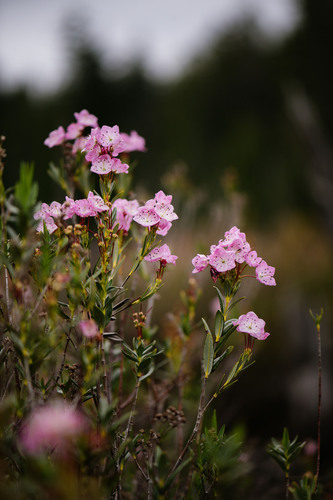
Western Bog Laurel
Kalmia microphylla
A hardy jewel of the mountain wetlands, Western Bog Laurel dazzles with its bowl-shaped pink blossoms and fascinating 'spring-loaded' pollination system. This evergreen shrub is a master of survival in the coldest, soggiest corners of Western North America.
Quick Identification
Size
A low-growing shrub reaching 10–50 cm (4–20 inches) in height with a spread of up to 60 cm (24 inches).
Colors
Vibrant rose-pink to lavender-purple flowers; dark green leathery leaves with distinct silvery-white undersides.
Key Features
- Cup-shaped or bowl-shaped five-lobed flowers
- Leathery evergreen leaves with edges rolled inward (revolute)
- Ten stamens tucked into tiny pockets on the petals
- Low-creeping or mounded growth habit common in boggy soil
When You’ll See Them
Behavior
Western Bog Laurel is a resilient evergreen shrub that thrives in acidic, nutrient-poor environments where other plants struggle. While it doesn't 'behave' in the animal sense, it possesses a fascinating mechanical movement: its stamens are held under tension in small pockets on the petals. When a heavy pollinator like a bumblebee lands, the stamen snaps upward like a catapult, dousing the insect in pollen.
Ecologically, this plant is a vital early-season nectar source for subalpine insects. However, it contains grayanotoxins, making it highly toxic to livestock and humans if ingested. In a backyard or trail setting, it remains a stationary but visually dynamic subject as it transitions from tightly coiled deep-red buds to wide-open pink blossoms over the course of a few weeks in early summer.
EverydayEarth exclusive
Camera Tips
To capture the true beauty of Western Bog Laurel, you need to get low. Since this plant rarely exceeds 20 inches in height, mount your camera on a ground-level stake or a mini-tripod. Position the lens at a slight upward angle to showcase the unique 'catapult' stamens inside the pink floral cups. If your camera has a macro mode, use it to highlight the fine white hairs on the stems and the waxy texture of the evergreen leaves.
Because these plants grow in open bogs and meadows, lighting can be harsh. The best shots are often captured during the 'golden hours' after sunrise or before sunset, which prevents the bright pink petals from looking washed out. If you are using a trail camera with time-lapse capabilities, set it to trigger every 15-30 minutes during the peak blooming weeks in July. This allows you to create a stunning video of the flowers opening and closing in response to the sun.
Don't just focus on the plant itself—Western Bog Laurel is a magnet for pollinators. To capture insects in action, set your camera's trigger speed to its fastest setting and use a high-speed burst mode if available. Since bogs are often windy, ensure your camera mount is extremely stable; even a slight breeze can turn a beautiful close-up of a flower into a blurry pink smudge. If you're setting up in a backyard bog garden, avoid using artificial lures, as the nectar is the primary draw for the wildlife you'll want to photograph.
Similar Species
Species that look similar or are commonly confused with Western Bog Laurel.
Frequently Asked Questions
Record Western Bog Laurel at your habitat
Connect a camera to start building your own species record — AI identifies every visitor automatically.