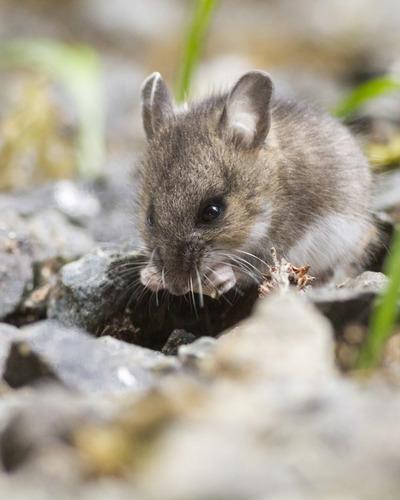
Western Deer Mouse
Peromyscus sonoriensis
Meet the Western Deer Mouse, a wide-eyed and nimble nocturnal acrobat. While they may be small, these native rodents are essential architects of the western wilderness and charming visitors to your nighttime garden.
Quick Identification
Size
Total length: 12-20 cm (4.7-7.9 in); Tail: 4.5-10 cm (1.8-3.9 in); Weight: 15-32 g (0.5-1.1 oz)
Colors
Fawn to grayish-brown upper body with a sharply contrasting white belly and white feet. The tail is distinctly two-toned (dark on top, white on bottom).
Key Features
- Distinctly bicolored body with pure white belly and feet
- Large, prominent black eyes and thin, rounded ears
- Tail is sharply two-toned and roughly half the total body length
- Extremely long whiskers used for navigating in the dark
When You’ll See Them
Behavior
The Western Deer Mouse is an incredibly agile and energetic nocturnal rodent. Unlike the common invasive house mouse, these native mice are exceptionally clean and are known for their impressive leaping and climbing abilities. They are primarily solitary foragers, but during the colder winter months, they may huddle in small groups within well-insulated nests to share body heat and survive freezing temperatures.
These mice are industrious "gatherers" that spend most of their waking hours searching for seeds, nuts, and insects. They have a strong homing instinct and are highly curious about new objects in their environment, which makes them excellent subjects for backyard observation. Because they are a foundational species in the food web, serving as a primary food source for owls, foxes, and snakes, they move in quick, nervous bursts and are always alert for predators.
EverydayEarth exclusive
Camera Tips
To capture the best footage of a Western Deer Mouse, camera placement is everything. You should position your camera very low to the ground—no more than 2 to 5 inches high. These mice prefer to travel along 'edges,' so place your camera alongside a garden wall, a fallen log, or the base of a fence. Angling the camera to look down a long, clear path next to these structures will give you the longest window of time to see them as they scurry past.
Because these mice are small and move incredibly fast, a camera with a high-speed trigger and a fast recovery time is essential. If your camera has a 'Macro' or close-focus mode, use it; otherwise, place the camera at least 3-4 feet back from the target area to prevent the subject from appearing as a white, overexposed blur in the infrared flash. Using video mode rather than still photos is highly recommended, as it captures their fascinating grooming and foraging behaviors that a single photo would miss.
Baiting is a reliable way to get them to pause for a clear shot. A small amount of peanut butter smeared on a rock or a handful of sunflower seeds placed in a consistent spot will encourage them to stop and feed. If you want to see their climbing skills, place a bit of bait on top of a vertical stump or a low-hanging branch. During the autumn, you might even capture them with their cheek pouches bulging as they make repeated trips to gather supplies for their winter cache.
Check your camera settings to ensure the PIR (Passive Infrared) sensitivity is set to 'High.' Because Western Deer Mice are lightweight, they may not always trigger a sensor set to 'Medium.' Also, look for the 'eye-shine' in your footage—their large, dark eyes reflect infrared light very brightly, making them easy to spot even if they are partially hidden in the grass.
Similar Species
Species that look similar or are commonly confused with Western Deer Mouse.
Frequently Asked Questions
Record Western Deer Mouse at your habitat
Connect a camera to start building your own species record — AI identifies every visitor automatically.