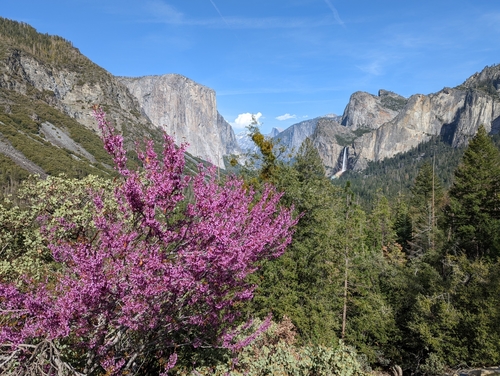
Western Redbud
Cercis occidentalis
A stunning herald of spring, the Western Redbud paints the hillsides of the West in shades of brilliant magenta. Its iconic heart-shaped leaves and nitrogen-fixing roots make it as ecologically vital as it is beautiful.
Quick Identification
Size
2-6 meters (7-20 feet) tall and wide; trunk diameter up to 15 cm (6 inches)
Colors
Vibrant magenta to rose-pink flowers; apple-green to bluish-green leaves; reddish-brown seed pods; silver-gray bark
Key Features
- Distinctive heart-shaped or kidney-shaped leaves
- Bright magenta pea-like flowers that bloom on bare wood in spring
- Flat, papery seed pods 5-10 cm long
- Multi-trunked, spreading growth habit
When You’ll See Them
Behavior
The Western Redbud is a foundational species for California and Oregon ecosystems, known for its dramatic seasonal transformations. In late winter or early spring, before its leaves even appear, the tree erupts in a dense covering of magenta blossoms that emerge directly from the bark. This early blooming period makes it a critical resource for native bees and butterflies emerging from dormancy. As a member of the legume family, it works with soil bacteria to fix nitrogen, actually improving the soil quality around it.
In human-centric landscapes, the Western Redbud is cherished for its drought tolerance and ornamental beauty. It interacts with its environment by providing nesting sites for small birds and hosting the larvae of several butterfly species. During the summer, its dense, heart-shaped foliage provides cool shade, and by autumn, the leaves turn a brilliant gold or rusty red, while the persistent seed pods provide winter interest and a food source for foraging birds and small mammals.
EverydayEarth exclusive
Camera Tips
Capturing the Western Redbud on an AI-powered backyard camera is most rewarding during its spring bloom. Position your camera approximately 3 to 5 feet from the ground, angled slightly upward toward a cluster of branches. This angle allows the camera to capture both the intricate details of the magenta flowers and any visiting pollinators, such as carpenter bees or hummingbirds, which are frequently detected as movement by AI triggers. Ensure the camera is facing north or south to avoid direct lens flare from the sun, which can wash out the deep pink hues of the blossoms.
For the best results with AI identification, use a high-shutter speed or 'burst' mode if your camera supports it. The Western Redbud’s flowers are small and can move quickly in the breeze, which sometimes confuses motion sensors. By setting a shorter trigger interval, you are more likely to capture the perfect 'hero shot' when the wind dies down. If you are using a camera to monitor the tree's growth, consider a fixed position for a long-term time-lapse; seeing the transition from bare bark to neon flowers to heart-shaped leaves is a spectacular visual sequence.
During the summer and fall, shift your focus to the seed pods and the visitors they attract. Placing the camera to look through the foliage can capture the unique way sunlight filters through the translucent, heart-shaped leaves, creating a beautiful bokeh effect. Because the Western Redbud is a 'hub' for backyard activity, you don't necessarily need bait; however, placing a small water source nearby can encourage birds to land on the redbud's sturdy branches, giving the camera more opportunities to capture both the plant and the wildlife that depends on it.
Similar Species
Species that look similar or are commonly confused with Western Redbud.
Frequently Asked Questions
Record Western Redbud at your habitat
Connect a camera to start building your own species record — AI identifies every visitor automatically.