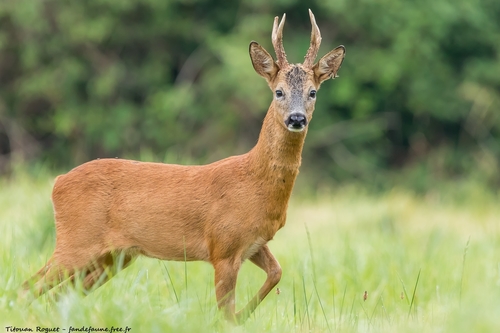
Western Roe Deer
Capreolus capreolus
Elegant, elusive, and unexpectedly vocal, the Western Roe Deer is a master of the woodland edge. Often called the 'garden sprite,' these small deer bring a touch of wild grace to any backyard they visit.
Quick Identification
Size
Length: 95–135 cm (3.1–4.4 ft); Shoulder height: 65–75 cm (2.1–2.5 ft); Weight: 15–35 kg (33–77 lb)
Colors
Bright reddish-brown in summer; grey-brown or sandy in winter; white or creamy heart-shaped rump patch; males have short, upright antlers.
Key Features
- Distinctive white heart-shaped rump patch with no visible tail
- Short, rough-textured antlers on males with three points when mature
- Large, dark eyes surrounded by a pale ring and a black nose
- Characteristic canine-like barking sound when alarmed
When You’ll See Them
Behavior
The Western Roe Deer is a small, elegant cervid known for its shy and somewhat solitary nature. Unlike many other deer species that form large, visible herds, Roe Deer are often found alone or in small family groups known as 'bevies.' They are highly territorial, particularly the males (bucks), who will vigorously defend their range during the mating season by marking trees with their scent glands and scraping the ground with their hooves.
These deer are incredibly nimble and well-adapted to life in dense undergrowth. They are selective browsers, picking through a variety of plants rather than grazing on large amounts of grass. One of their most fascinating behaviors is the 'bark'—a loud, rhythmic coughing sound they make when they sense an intruder. This vocalization serves to warn other deer and let a predator know it has been spotted, often followed by a graceful retreat into the safety of the woods.
EverydayEarth exclusive
Camera Tips
To successfully capture Western Roe Deer on your AI camera, height and placement are everything. You should mount your camera approximately 60 to 75 cm (2 to 2.5 feet) off the ground—roughly at their eye level. Avoid pointing the camera directly down a trail; instead, aim it at a 45-degree angle across a 'run' or entry gap in a hedge. This placement ensures the motion sensor triggers while the deer is still in the frame, providing a beautiful profile shot rather than just a tail disappearing into the brush.
Because Roe Deer are crepuscular, they are most active during the low-light hours of dawn and dusk. This makes 'No-Glow' or 'Black Flash' infrared cameras highly recommended. Standard IR flashes can sometimes emit a faint red glow that might startle a wary buck or doe, causing them to bolt. For the best results, look for spots where a lawn meets a wooded area or near natural attractants like fallen apples, rose bushes, or a clean water source. These are 'high-traffic' zones where the deer will naturally pause to forage, giving your camera plenty of time to capture high-quality video.
During the summer months (the rut), bucks become much more active during the day as they patrol their territories. This is the best time to switch your camera to 'Video Mode' with a 20-second clip length. You might capture fascinating territorial behaviors such as 'fraying,' where a buck rubs his antlers against small saplings to mark his presence. In the winter, Roe Deer are more likely to visit suburban gardens in search of food. If you provide a mineral lick or high-quality deer feed, place your camera nearby, but ensure it is tucked back to avoid making the deer feel exposed while they eat.
Lastly, be mindful of the wind and human scent. When checking your camera or changing batteries, try to do so during the middle of the day when the deer are likely bedding down in deep cover. Use gloves to minimize scent transfer on the camera housing. Roe Deer have an incredibly keen sense of smell, and if they associate your camera location with a strong human scent, they may alter their path to avoid the area entirely.
Frequently Asked Questions
Record Western Roe Deer at your habitat
Connect a camera to start building your own species record — AI identifies every visitor automatically.