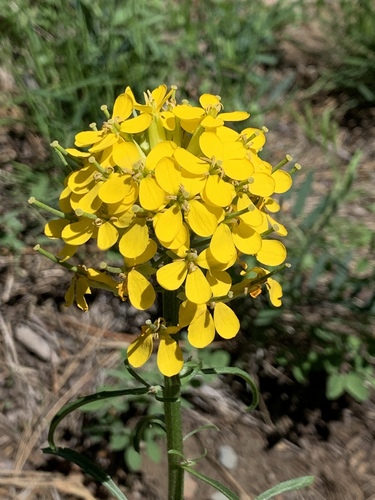
Western Wallflower
Erysimum capitatum
A beacon of the western wilderness, the Western Wallflower paints hillsides in hues of gold and amber. This rugged beauty is a favorite stop for passing butterflies and a must-have for any sun-drenched pollinator garden.
Quick Identification
Size
Stems reach 15-90 cm (6-36 inches) in height; individual flowers are roughly 1.5-2.5 cm (0.6-1 inch) across.
Colors
Brilliant yellow to deep burnt orange, occasionally appearing maroon or purple in higher elevations; leaves are a dusty grayish-green.
Key Features
- Four petals arranged in a distinct cross shape
- Long, narrow seed pods (siliques) that grow upward
- Lance-shaped leaves with slightly toothy edges
- Dense terminal clusters of fragrant blooms
When You’ll See Them
Behavior
In a backyard setting, the Western Wallflower is highly valued for its ability to thrive in poor, well-drained soils where other plants might struggle. It interacts with humans primarily through its role in xeriscaping and pollinator gardens, providing a low-maintenance splash of color. It typically follows a biennial life cycle, spending its first year as a modest green rosette before sending up its majestic, nectar-rich flowering stalk in its second year.
EverydayEarth exclusive
Camera Tips
Since the Western Wallflower is a magnet for pollinators, your camera will likely be triggered by more than just the plant itself. Use a 'Zone Trigger' setting if your camera supports it, focusing on the flower head to catch the split-second landings of Swallowtail butterflies and native bees. Because the flowers are most vibrant in direct sun, midday is actually an excellent time for photos, though 'Golden Hour' (the hour before sunset) will bring out the deep orange and red hues of the petals beautifully.
If you are using a trail camera to monitor growth over time, consider a time-lapse setting. These plants can grow several inches in a week during their peak spring spurt. Ensure the area immediately around the base of the plant is clear of tall grass that might blow in the wind and cause 'false triggers.' If your camera has a macro or close-focus mode, use it to highlight the unique four-petal 'cross' structure that gives this genus its botanical name, Erysimum.
Lastly, pay attention to the wind. Wallflowers have sturdy stems, but high winds can cause motion blur. If you're setting up in a windy area like a sand dune or ridge, use a faster shutter speed setting (1/250 or higher) to freeze the motion. If you want to attract even more activity to your camera's field of view, plant a small cluster of these flowers together rather than a single specimen; the concentrated scent and color will act as a natural lure for the wildlife your AI camera is designed to identify.
Frequently Asked Questions
Record Western Wallflower at your habitat
Connect a camera to start building your own species record — AI identifies every visitor automatically.