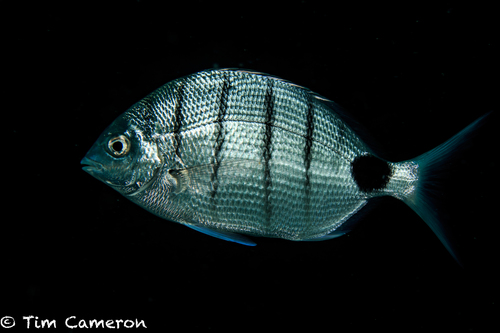
White Seabream
Diplodus lineatus
A shimmering specter of the Atlantic reefs, the White Seabream is a master of the Cape Verde surf. With its signature stripes and curious nature, it offers a window into the vibrant life of volcanic coastal ecosystems.
Quick Identification
Size
Typically 15-30 cm (6-12 inches) in length; weights range from 0.2-0.6 kg (0.4-1.3 lbs).
Colors
Brilliant silver-grey body with 9-11 thin, dark vertical bars; distinct black saddle-shaped blotch on the tail base.
Key Features
- 9-11 thin vertical dark stripes along the flanks
- Large black saddle-shaped spot on the caudal peduncle
- Deep, compressed silver body
- Small mouth with prominent, nibbling front teeth
When You’ll See Them
Geographic range
Where Does the White Seabream Live?
The White Seabream (Diplodus lineatus) is a specialized marine species endemic to the Atlantic waters of the Cape Verde archipelago. It lives exclusively along the rugged, volcanic coastlines of these islands, thriving in the nutrient-rich Macaronesian region. Unlike more cosmopolitan seabreams, this particular species does not have introduced populations and remains a unique biological hallmark of the Cape Verdean marine ecosystem.
Basemap © OpenStreetMap contributors
Behavior
The White Seabream is a highly social and energetic fish, typically found in small to medium-sized schools that navigate the turbulent waters of the surf zone and rocky reefs. They are masters of surge environments, using their deep, compressed bodies to maintain stability while foraging in cracks and crevices. While they can be somewhat shy in the presence of divers, they are naturally inquisitive and will often approach stationary objects once they have determined there is no immediate threat.
These fish exhibit a fascinating daily routine, moving from deeper nighttime resting spots to shallower, high-energy zones during the day to feed. Within their schools, they maintain a loose social structure, often mingling with other Diplodus species. They are also known to follow larger bottom-disturbing animals, like rays or larger fish, to snatch up any small invertebrates that are stirred up from the seabed.
EverydayEarth exclusive
Camera Tips
Capturing the White Seabream requires a specialized underwater camera housing or a dedicated marine trail camera. For the best results, mount your camera on a weighted base or a heavy tripod and place it in the 'surge zone'—the area where waves break against rocky outcrops. The bubbles and movement in this area attract the fish as they look for food dislodged by the water. Angle the lens slightly upward to catch the natural sunlight filtering through the surface, which will make their silver scales pop against the blue water.
To guarantee a visit from a school, use a 'scent station' rather than loose bait. Secure a mesh bag containing crushed shellfish or sea urchins directly in front of the camera lens, about 12-18 inches away. This keeps the fish in the focal plane for longer periods. If you are using an AI-powered camera, ensure the software is calibrated for high-refraction environments, as the shimmer of the water can sometimes trigger false positives.
Optimal lighting occurs between 10 AM and 2 PM when the sun is directly overhead, providing the best visibility and color accuracy. If the water is murky due to heavy surf, use a red filter on your lens to bring back the natural contrast. Set your camera to record in high frame rates (60fps or higher) because these fish move with sudden, darting motions that can appear blurry at lower speeds.
Similar Species
Species that look similar or are commonly confused with White Seabream.
Frequently Asked Questions
Record White Seabream at your habitat
Connect a camera to start building your own species record — AI identifies every visitor automatically.