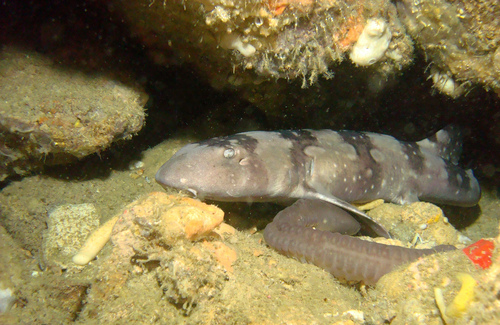
White-spotted Bamboo Shark
Chiloscyllium plagiosum
The White-spotted Bamboo Shark is a gentle, nocturnal 'walker' of the reef flats. With its striking starry pattern and docile nature, it is a favorite for coastal observers and aquarium enthusiasts alike.
Quick Identification
Size
Adults reach up to 93 cm (37 in) in length; typically weigh between 2 and 4 kg (4.4 to 8.8 lbs).
Colors
Dark brown or grayish-brown base with numerous white spots across the body; juveniles show dark transverse bands that fade as they mature.
Key Features
- Slender, elongated body with a thick tail
- Distinctive white spots across the dorsal surface
- Small barbels near the mouth resembling whiskers
- Two dorsal fins of similar size set far back on the body
When You’ll See Them
Behavior
The White-spotted Bamboo Shark is a sluggish, bottom-dwelling species that is primarily nocturnal. During the daylight hours, it is most often found tucked away in reef crevices or resting under coral overhangs to avoid predators. Unlike many sharks that must swim to breathe, this species can pump water over its gills while stationary, allowing it to remain perfectly still for hours.
When night falls, these sharks become active foragers. They possess a unique 'walking' gait, using their muscular pectoral and pelvic fins to crawl along the seabed rather than swimming. They are exceptionally docile and harmless to humans, often ignoring divers or snorkelers. In a coastal or aquarium environment, they are known for their hardiness and ability to tolerate the fluctuating oxygen levels found in shallow tide pools.
EverydayEarth exclusive
Camera Tips
To capture high-quality footage of a White-spotted Bamboo Shark, you will need a dedicated underwater camera setup or a waterproof trail camera housing. If you are monitoring a coastal tide pool or a shallow reef, mount your camera 6 to 10 inches off the floor, angled slightly downward. These sharks are 'substrate-oriented,' meaning they spend almost all their time touching the bottom. Placing the camera too high will miss the intricate 'walking' movement they perform with their fins.
Attracting a bamboo shark to your lens is best achieved through scent. Use a perforated PVC tube or a mesh bait bag filled with oily fish like sardines or chopped squid. Secure the bait directly in the camera's line of sight, approximately 2 to 3 feet away. Because these sharks hunt by smell (chemoreception), they will follow the 'scent trail' right to your camera. Using infrared (IR) or red-light settings is crucial; while they can see white light, they are much less likely to be spooked by red wavelengths, allowing for more natural hunting behavior on film.
For those using AI-powered cameras in large home reef systems, focus your 'activity zones' on the entrances to caves or rock piles. These sharks are creatures of habit and will often return to the exact same crevice to sleep every morning. Set your camera to record in high-definition video bursts rather than still photos, as the slow, undulating movement of their long tails is one of their most distinctive and photogenic traits. Ensure your housing is cleaned of algae weekly to prevent the AI from losing focus on the subject.
Similar Species
Species that look similar or are commonly confused with White-spotted Bamboo Shark.
Frequently Asked Questions
Record White-spotted Bamboo Shark at your habitat
Connect a camera to start building your own species record — AI identifies every visitor automatically.