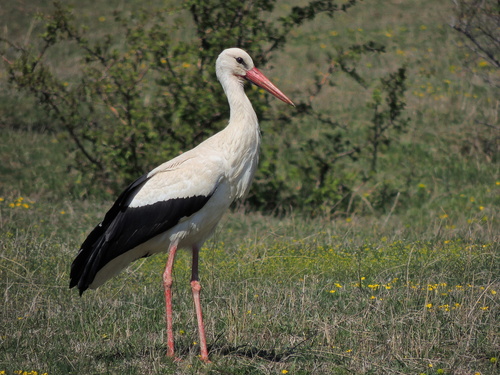
White Stork
Ciconia ciconia
A majestic symbol of luck and rebirth, the White Stork is a master of the skies and a familiar neighbor in towns across Europe and Asia. These elegant giants are best known for their massive nests and the rhythmic 'clattering' of their bright red beaks.
Quick Identification
Size
100–115 cm (39–45 in) long; 155–215 cm (61–85 in) wingspan; weight 2.3–4.4 kg (5–10 lbs)
Colors
Pure white body and neck with jet-black flight feathers on the wings; adults feature bright red bills and legs
Key Features
- Bright red, long pointed beak
- Contrasting white plumage with black wing edges
- Stilt-like red legs
- Extends neck fully during flight
- Massive stick nests often on man-made structures
When You’ll See Them
Behavior
The White Stork is a highly social and iconic bird, famous for its tendency to nest in close proximity to humans. Unlike many shy waterfowl, these birds frequently build massive, multi-year stick nests on rooftops, chimneys, and church spires. They are relatively silent birds because they lack a functional syrinx; instead, they communicate through a distinctive, rhythmic bill-clattering that sounds like a rapid-fire wooden percussion instrument, often used during greeting ceremonies at the nest.
In the wild, they are patient hunters, often seen pacing slowly through wetlands or freshly mowed fields. They are long-distance migrants, utilizing rising columns of warm air (thermals) to soar effortlessly across continents. While they are generally peaceful, they are fiercely protective of their nesting sites and will return to the same location year after year, often with the same mate.
EverydayEarth exclusive
Camera Tips
To capture the White Stork on a trail camera, your best bet is to focus on height and scale. If you are lucky enough to have a nest on or near your property, mounting a camera on a nearby structure or a dedicated pole is ideal. Because these birds are large, ensure your camera is positioned at least 10-15 feet away to keep the entire bird in the frame. A wide-angle lens is preferred to capture the full 2-meter wingspan when they depart or land on the nest.
For ground-level activity, place your camera near the edges of shallow ponds or in open, short-grass meadows where they forage. Unlike smaller birds, storks aren't attracted to traditional feeders; however, they are drawn to recently tilled soil or freshly mown grass where insects and rodents are easily exposed. Set your camera’s trigger speed to the fastest setting possible, as their takeoff involves a powerful, sudden jump that can easily result in a blurry shot or a 'miss' if the sensor is sluggish.
Video mode is highly recommended for this species. Capturing the 'up-down' greeting display and the accompanying bill-clattering sound provides much more behavioral insight than a static image. If your camera allows for it, set the video length to at least 20-30 seconds to catch the full interaction between a returning parent and their mate or chicks.
Lighting is crucial because of their high-contrast white and black plumage. Direct, midday sun can 'blow out' the white feathers, making them look like a bright white blob. Try to position your camera so it faces North or South to avoid the harsh shadows of East-West sun paths. In the early morning or late afternoon, the low sun hitting their red beaks and legs can produce stunning, professional-grade wildlife photography results.
Similar Species
Species that look similar or are commonly confused with White Stork.
Frequently Asked Questions
Record White Stork at your habitat
Connect a camera to start building your own species record — AI identifies every visitor automatically.