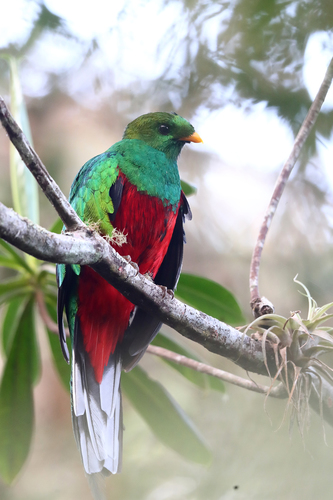
White-tipped Quetzal
Pharomachrus fulgidus
A jewel of the northern Andes, the White-tipped Quetzal dazzles with its emerald feathers and crimson chest. This elusive cloud-forest dweller is a must-see for any high-altitude bird enthusiast.
Quick Identification
Size
Length of 32-33 cm (12.5-13 in); weight approximately 150-170g (5.3-6 oz)
Colors
Male features shimmering emerald-green upperparts and breast with a brilliant scarlet-red belly; females have a greyer throat and less intense red belly.
Key Features
- Iridescent green plumage with a bright red belly
- Large, white-tipped outer tail feathers visible from below
- Yellow bill in males, darker in females
- Stocky profile with a relatively large head
When You’ll See Them
Geographic range
Where Does the White-tipped Quetzal Live?
This vibrant bird is native to the northern reaches of South America, specifically inhabiting the lush mountain ranges of the Caribbean coast. Its core range is concentrated in the coastal cordillera of northern Venezuela and the isolated Santa Marta mountains of northeast Colombia, with some populations extending into the highland forests of western Guyana. You won't find this species outside of these specialized tropical highland corridors, as they rely heavily on the unique humidity and flora of the Andes and coastal peaks.
Basemap © OpenStreetMap contributors
Behavior
Like most members of the trogon family, the White-tipped Quetzal is a relatively sedentary bird that spends long periods perched upright and motionless on high branches. This behavior, known as 'sit-and-wait' foraging, allows them to blend into the dappled light of the forest canopy, making them surprisingly difficult to spot despite their vibrant coloration. They are most vocal during the breeding season, when males emit a series of melodic, mournful whistling calls to defend territory.
While primarily solitary or found in pairs, they may occasionally congregate at high-value fruiting trees. Their flight is undulating and direct, often characterized by short bursts of movement followed by long periods of stillness. They are generally shy and avoid human contact, preferring the quiet seclusion of undisturbed humid highlands.
EverydayEarth exclusive
Camera Tips
To capture a White-tipped Quetzal on your backyard or trail camera, focus on the vertical structure of the forest. These birds are canopy and mid-story specialists, so placing your camera on a high-elevation balcony or a tree-mounted platform 15 to 25 feet up is essential. Angle the camera slightly downward to capture them as they perch on horizontal branches while scanning for fruit or insects.
Since they are heavily attracted to specific fruit, identify Lauraceae trees (wild avocados) or other native berry-producing trees on your property. Place the camera facing a clear 'landing branch' near the fruit clusters. Unlike some backyard birds, they do not visit traditional seed or suet feeders, so your best 'lure' is maintaining native fruiting vegetation. They are most active in the early morning light when the forest is mistiest; ensure your camera has excellent low-light performance to handle the low contrast of the cloud forest environment.
Use a high-resolution video setting to capture the iridescence of their feathers, which can shift from gold to deep blue depending on the angle of the sun. If using motion-activated triggers, set the sensitivity to 'high.' Because these birds often sit perfectly still for minutes at a time, a less sensitive sensor might miss the brief window when they finally move. A short video burst of 15-20 seconds is often more rewarding than a still photo, as it can capture their unique tail-flicking behavior and soft vocalizations.
Similar Species
Species that look similar or are commonly confused with White-tipped Quetzal.
Frequently Asked Questions
Record White-tipped Quetzal at your habitat
Connect a camera to start building your own species record — AI identifies every visitor automatically.