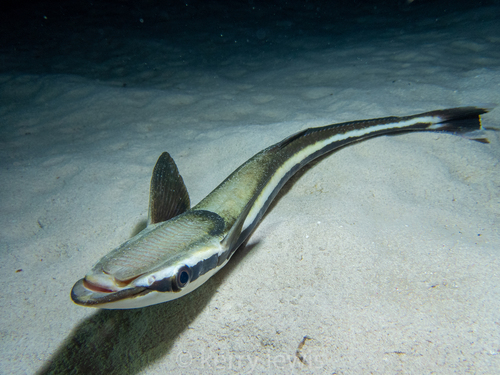
Whitefin Sharksucker
Echeneis neucratoides
The Whitefin Sharksucker is the ocean's ultimate opportunist, featuring a specialized suction disk that allows it to hitch rides on the sea's greatest predators. With its striking white-tipped fins and sleek racing stripe, it is a master of both attachment and agility.
Quick Identification
Size
Typically 50-75 cm (20-30 inches) in length; weighs up to 2.3 kg (5 lbs).
Colors
Dark gray to brownish body with a bold black horizontal stripe bordered by white; fins feature distinct white tips and margins.
Key Features
- Large oval sucking disk on the top of the head
- Slender, elongated body with a pointed snout
- Distinctive dark lateral stripe with white borders
- White-edged dorsal and anal fins
When You’ll See Them
Behavior
The Whitefin Sharksucker is one of the most specialized hitchhikers in the marine world. Utilizing a highly modified dorsal fin that has evolved into a powerful suction disk, this fish attaches itself to a variety of hosts including sharks, rays, sea turtles, and even large bony fish. This relationship is often mutualistic; the sharksucker gains protection, effortless transportation, and a steady supply of food scraps, while the host benefits from the removal of harmful parasites and dead skin.
Despite their reputation for clinging to others, Whitefin Sharksuckers are surprisingly capable free-swimmers. They are frequently seen darting away from their hosts to forage for small crustaceans or to investigate nearby divers. In social settings, they are generally solitary or found in small pairs, often sharing a single large host like a whale shark or a manta ray. They are harmless to humans, though they are known for their curious nature and may occasionally try to attach themselves to a swimmer's leg or a boat hull.
EverydayEarth exclusive
Camera Tips
Capturing high-quality footage of a Whitefin Sharksucker requires a specialized underwater approach. If you are using an underwater action camera or a submersible trail cam, your best bet is to locate a 'cleaning station' on a local reef. These are specific spots where large predatory fish or sea turtles congregate to have parasites removed. Position your camera on a weighted tripod near a prominent coral head, ensuring the lens is angled slightly upward to capture the unique suction disk on the sharksucker's head as it swims above.
For those monitoring from a dock or pier, use a 'drop-cam' setup. Lower your camera to a depth of 5 to 10 feet near the pilings, as Whitefin Sharksuckers often hang around man-made structures waiting for a host to pass by. To draw them into the frame, you can use a scent lure—a small mesh bag filled with crushed sardines or oily mackerel works wonders. The movement of shiny, reflective objects can also pique their curiosity, so consider attaching a small silver spoon or flasher a few inches from the camera lens.
Because water absorbs light quickly, timing is everything. Aim for 'high sun' hours between 11 AM and 2 PM to ensure maximum light penetration, which will make the white margins of their fins pop against the blue water. Set your camera to a high frame rate, such as 60 or 120 fps, because while they look lazy when attached to a shark, they are incredibly fast and erratic when free-swimming. If your camera has a 'pro-tune' or manual white balance setting, lock it to 'underwater' or '5500k' to prevent the footage from looking overly green or washed out.
Similar Species
Species that look similar or are commonly confused with Whitefin Sharksucker.
Frequently Asked Questions
Record Whitefin Sharksucker at your habitat
Connect a camera to start building your own species record — AI identifies every visitor automatically.