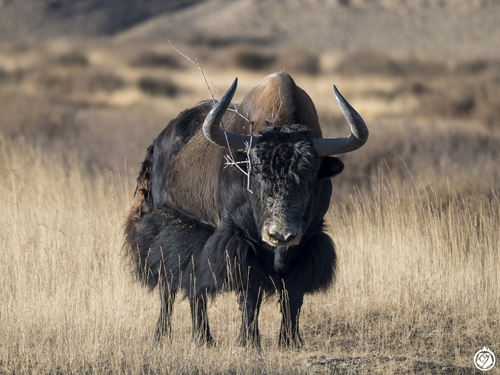
Wild Yak
Bos mutus
The Wild Yak is a living relic of the Ice Age, a massive and shaggy powerhouse that thrives in the thin air of the world's highest plateaus. Rarer and much larger than its domestic cousins, seeing one in the wild is a true bucket-list experience for any naturalist.
Quick Identification
Size
Body length 3-3.4m (10-11 ft); shoulder height 1.6-2.2m (5.2-7.2 ft); weight 300-1,000 kg (660-2,200 lbs)
Colors
Uniformly dark brown to blackish with a silver or gray muzzle; older individuals may show grey around the face
Key Features
- Massive upward-curving horns reaching 1 meter in length
- Dense, shaggy coat with an underbelly 'skirt' of long hair
- Pronounced shoulder hump
- Broad hooves designed for snow and rocky slopes
When You’ll See Them
Behavior
Wild yaks are the undisputed kings of the high-altitude tundra, possessing a stoic and hardy temperament suited for the brutal Himalayan climate. They are primarily social animals, with females and calves forming large, cohesive herds that can number in the hundreds. Adult males, by contrast, are often solitary or form small bachelor groups for most of the year, only joining the larger herds during the rutting season in autumn.
Unlike the docile domestic yak, the wild variety is extremely wary and suspicious of human activity. They have a highly refined sense of smell, which they use to detect predators and humans from great distances. When threatened, a herd will often flee into higher, more inaccessible terrain, but they are known to charge if they feel trapped or if a calf is in danger. Their movements are surprisingly graceful for their bulk, allowing them to navigate treacherous icy passes that would stop most other large mammals.
EverydayEarth exclusive
Camera Tips
Capturing a wild yak on camera is one of the ultimate challenges in wildlife photography due to their remote habitat and extreme wariness. Your best bet is to locate a natural 'highway'—look for well-worn trails through mountain passes or near high-altitude salt licks and glacial meltwater streams. Because these animals are so tall, mount your camera approximately 4 to 5 feet off the ground. Be sure to use an extremely secure mount, such as a heavy-duty security box or a rock-anchored bolt, as yaks are curious and may attempt to rub their massive bodies against your gear, which can easily crush standard plastic mounts.
Environmental conditions at these altitudes are brutal on electronics. You must use lithium batteries, as standard alkaline batteries will fail almost instantly in the sub-zero temperatures typical of yak territory. Consider a camera with a cellular uplink if you have signal, though in these remote areas, high-capacity SD cards are usually necessary. Set your camera to take a 'burst' of 3-5 photos per trigger; yaks move with a heavy, steady gait, and a single shot might only capture a portion of their massive bodies.
Scent control is critical when checking your cameras. Wild yaks can smell a human from over a kilometer away. Wear scent-blocking clothing and avoid visiting the camera site frequently—once every three months is ideal. To maximize your chances, use 'No-Glow' or 'Black Flash' infrared technology. Traditional red-glow IR can spook these animals in the dead of night, causing them to abandon the trail entirely. Look for areas with fresh 'pats' (dung) or disturbed earth where they have been foraging to ensure you are in an active zone.
Similar Species
Species that look similar or are commonly confused with Wild Yak.
Frequently Asked Questions
Record Wild Yak at your habitat
Connect a camera to start building your own species record — AI identifies every visitor automatically.