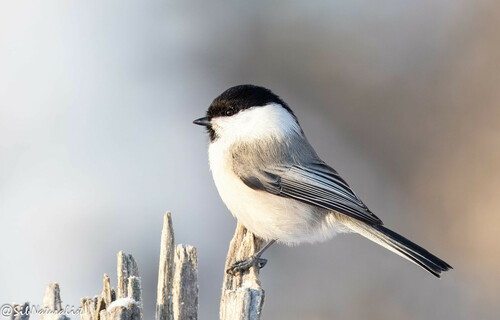
Willow Tit
Poecile montanus
The soft-plumaged Willow Tit is the elusive architect of the damp woods, uniquely known for carving its own home out of decaying trees. A shy but rewarding visitor, it brings a touch of wild woodland mystery to any backyard camera.
Quick Identification
Size
Length: 4.5 in (11.5 cm); Wingspan: 6.7–7.5 in (17–19 cm); Weight: 0.35–0.46 oz (10–13 g)
Colors
Dull black cap and bib, grey-brown upperparts, and off-white or buff underparts; wings feature a distinctive pale panel.
Key Features
- Large, scruffy-edged black bib
- Dull (not glossy) black cap extending to the nape
- Pale wing panel on folded wings
- Stocky, 'bull-necked' profile
When You’ll See Them
Behavior
The Willow Tit is a quiet, industrious bird that often goes unnoticed compared to its bolder cousins like the Great Tit or Blue Tit. Unlike most other members of the tit family, which occupy existing cavities, the Willow Tit is a skilled architect that frequently excavates its own nesting holes in the soft, decaying wood of birch or elder trees. This labor-intensive process makes them highly dependent on standing deadwood within their territory.
In the garden, they tend to be shy and nervous, often darting in to grab a single seed before retreating to the safety of nearby cover to eat or cache it. During the winter months, they frequently join 'roving tit flocks' with other small songbirds to forage, benefiting from the safety in numbers, though they rarely remain at a feeder for more than a few seconds at a time.
EverydayEarth exclusive
Camera Tips
To capture high-quality footage of the Willow Tit, your camera placement should prioritize safety and proximity to cover. These birds are naturally timid and rarely venture far into open spaces. Position your AI camera within 3–5 feet of a dense hedge or a thicket of shrubs. Because they are low-foraging birds, a mounting height of 4–6 feet is ideal. If you have a standing dead tree or a rotting stump in your yard, aim your camera there—this is their natural 'supermarket' and they will spend minutes meticulously searching the bark for larvae.
Baiting is highly effective for this species, but the presentation matters. While they enjoy hanging feeders, they are most comfortable on flat, natural surfaces. Try smearing high-energy suet or peanut butter directly into the deep grooves of tree bark within the camera's field of view. This encourages the bird to stay in the frame longer as it picks at the food, rather than the 'grab-and-fly' behavior seen at traditional seed feeders. Sunflower hearts are their preferred seed choice and provide the best lure for a clear, front-facing shot.
Technically, you need a camera with a fast trigger speed or a pre-buffer recording feature. Willow Tits are incredibly fast, and without a quick response time, you might only capture a tail feather as they exit the frame. If your camera allows for it, increase the frame rate to 60fps to capture the subtle fluttering of their wings. During the winter, early morning light provides the best contrast for their grey-brown plumage, so ensure your camera isn't facing directly into the rising sun to avoid silhouettes.
Similar Species
Species that look similar or are commonly confused with Willow Tit.
Frequently Asked Questions
Record Willow Tit at your habitat
Connect a camera to start building your own species record — AI identifies every visitor automatically.