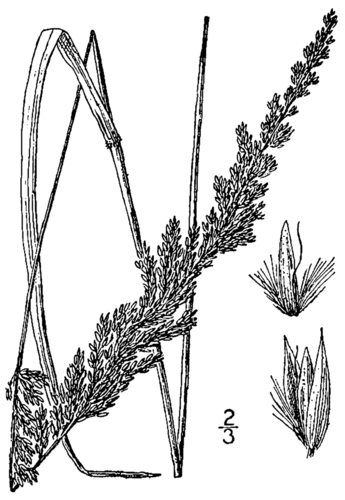
wood reedgrass
Calamagrostis perplexa
A rare and elegant inhabitant of rocky slopes, wood reedgrass is a hidden gem of the botanical world. Its swaying plumes and hardy nature provide a vital sanctuary for the smallest members of your backyard ecosystem.
Quick Identification
Size
24–48 inches (60–120 cm) tall; leaf blades 0.1–0.3 inches (3–8 mm) wide
Colors
Bright green foliage; flowering heads are tawny, straw-colored, or occasionally tinged with purple
Key Features
- Densely tufted perennial bunchgrass habit
- Narrow, upright flowering panicles 3-6 inches long
- Rough-textured leaf sheaths
- Awns (bristles) that are slightly bent and attached near the base of the floret
When You’ll See Them
Behavior
Wood reedgrass, specifically the rare Calamagrostis perplexa, is a perennial bunchgrass that remains stationary but plays a vital role in its ecosystem. Unlike common lawn grasses, it grows in distinct, elegant clumps. It spends the early spring focusing on root and blade development before sending up its tall, characteristic flowering stalks in mid-summer. As a wind-pollinated species, it relies on breezes to spread its pollen rather than enticing insects with nectar.
For the backyard observer, this species provides a fascinating look at micro-habitats. Its dense structure offers excellent thermal cover for ground-nesting insects and small mammals like voles. In the wind, the grass exhibits a rhythmic swaying motion that adds a sense of dynamic life to a landscape, even when no animals are present.
EverydayEarth exclusive
Camera Tips
To capture the beauty of wood reedgrass on a trail camera, focus on perspective. Set your camera on a low-profile stake or a small tripod only 6–12 inches off the ground. Aiming the lens slightly upward toward the flowering panicles (the 'plumes') will highlight their delicate structure against the sky or forest canopy. This low angle is also perfect for catching small mammals that may use the grass for cover.
Because this is a plant, use the time-lapse mode on your camera rather than motion triggers. A photo taken every 15–30 minutes during the peak growing months of June and July can be edited into a stunning video showing the grass swaying and growing over time. If you use motion triggers, set the sensitivity to 'High' to capture the subtle movements of the blades in the wind, which can create a very zen-like video clip.
Lighting is crucial for this species. If possible, position your camera so the sun is behind the grass (backlighting) during the golden hours of morning or late afternoon. This will make the fine hairs and tawny seed heads glow, making it much easier to identify the species in your footage. In the winter, keep the camera active; the dried stalks (senescence) provide great contrast against snow and attract foraging winter birds.
Frequently Asked Questions
Record wood reedgrass at your habitat
Connect a camera to start building your own species record — AI identifies every visitor automatically.