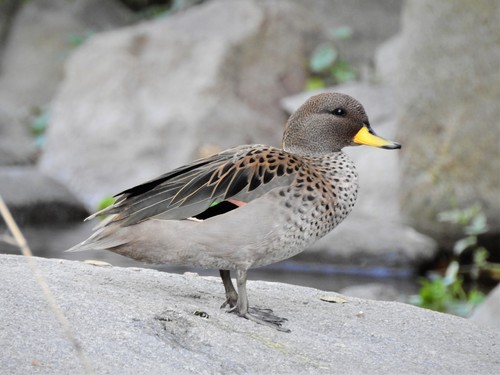
Yellow-billed Teal
Anas flavirostris
With its sunny disposition and iconic golden beak, the Yellow-billed Teal is a charming resident of South American waterways. This hardy little dabbler is a favorite for backyard observers, offering a splash of color and constant activity to any pond-side camera setup.
Quick Identification
Size
Length: 35–45 cm (14–18 in); Wingspan: 60–70 cm (24–28 in); Weight: 400–600 g (0.8–1.3 lbs)
Colors
Mottled grey and brown body with fine dark spotting; distinctive bright yellow bill with a black line along the top ridge; males and females look nearly identical.
Key Features
- Bright yellow bill with a black stripe on the culmen
- Small, compact dabbling duck profile
- Dark brown head contrasting with a paler, spotted chest
- Green speculum (wing patch) with white borders visible during flight
When You’ll See Them
Behavior
The Yellow-billed Teal is a social and relatively bold duck, often found in pairs or small family groups. Unlike many other duck species where the male is much flashier than the female, both sexes of the Yellow-billed Teal share the same attractive mottled plumage and vibrant yellow beak. They are primarily dabbling ducks, meaning they feed by filtering through surface water or tipping their tails up to reach submerged plants, rather than diving completely underwater.
These birds are generally quite tolerant of human presence, especially in suburban areas with established ponds or lagoons. They have a characteristic high-pitched whistling call that is often the first sign of their presence. While they are capable flyers, they spend a significant amount of their day lounging on muddy banks or swimming slowly through vegetation-rich waters. Their social interactions are usually peaceful, though males can become territorial during the breeding season.
EverydayEarth exclusive
Camera Tips
To capture the best footage of Yellow-billed Teals, positioning is everything. Because these ducks are low to the ground, you should mount your camera just a few inches above the waterline. A 'frog's eye view' creates a much more intimate and professional-looking shot than looking down from a high bank. If you have a private pond or shoreline, try using a stake mount or a low-profile tripod weighted with rocks to keep the camera steady on the muddy edge.
Since they are dabbling ducks, they are highly attracted to shallow areas with plenty of aquatic vegetation. If you want to lure them specifically into your camera's field of view, a small amount of mixed poultry grain or cracked corn placed at the water's edge can be very effective. Ensure the bait is placed in very shallow water (less than 2 inches deep) so they have to 'dabble' right in front of the lens. Be mindful of local wildlife feeding regulations before setting out food.
For camera settings, use a fast trigger speed and high-speed burst mode. Ducks move their heads rapidly while filtering water, and a slow shutter can result in motion blur. If your camera supports it, 60fps video is ideal for capturing the shimmer of their green wing patches when they stretch or preen. Because they are most active during the 'golden hours' of dawn and dusk, ensure your camera has good low-light performance or set it to a higher ISO sensitivity to maintain clarity during these peak activity times.
Seasonal timing can also provide unique shots. During the breeding season, keep an eye out for ducklings, which are incredibly active and provide great 'action' footage. If you are in a colder region where some water surfaces freeze, look for any remaining patches of open water; Yellow-billed Teals will congregate there in higher numbers, making it much easier to capture multiple birds in a single frame.
Similar Species
Species that look similar or are commonly confused with Yellow-billed Teal.
Frequently Asked Questions
Record Yellow-billed Teal at your habitat
Connect a camera to start building your own species record — AI identifies every visitor automatically.