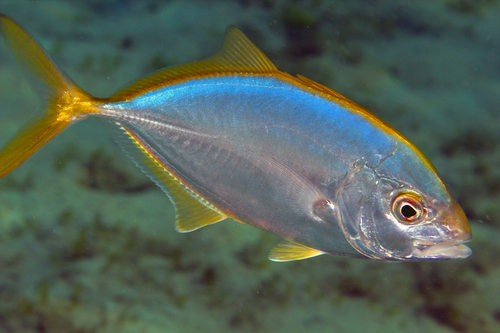
Yellow Jack
Caranx bartholomaei
The Yellow Jack is a vibrant, hard-charging predator of the Atlantic reefs, recognized by its brilliant brassy hues and incredible speed. Often found shadowing larger rays or sharks, this clever hunter is a favorite sight for coastal observers and underwater photographers alike.
Quick Identification
Size
Typically 15-24 inches (38-60 cm), but can reach up to 39 inches (1 meter) and weigh over 30 lbs (14 kg).
Colors
Brassy to pale yellow on the back, fading to a silvery-white belly; fins are distinctly yellow, especially in adults.
Key Features
- Strongly compressed, oval-shaped body
- Yellowish-green to brassy back with silvery sides
- Short upper jaw that does not extend past the front of the eye
- Distinctive yellow fins and a deeply forked tail
When You’ll See Them
Behavior
The Yellow Jack is a swift and powerful predator often found patrolling coral reefs, shipwrecks, and sandy flats. While juveniles are frequently found schooling under floating sargassum matts for protection, adults tend to be more solitary or travel in small, loose groups. They are known for their high-energy swimming style, constantly on the move in search of their next meal.
One of the most fascinating behaviors of the Yellow Jack is its tendency to 'shadow' larger marine animals. They are often seen swimming closely alongside stingrays, nurse sharks, or even large parrotfish. By following these bottom-dwellers, the Yellow Jack can easily snatch up small prey items that are flushed out of the sand or reef crevices by the larger animal's movement. They are generally wary of humans but can be curious about divers and underwater camera equipment.
EverydayEarth exclusive
Camera Tips
Capturing the Yellow Jack on camera requires an underwater setup, such as a waterproof action camera or a specialized dock-mounted lens. Since these fish are highly attracted to structure and movement, placing your camera near pier pilings, reef edges, or submerged debris is your best bet. Because they inhabit the Atlantic from Massachusetts to Brazil, ensure your camera is positioned in high-visibility water to catch their brassy sheen.
To draw them into the frame, consider using 'teasers.' While we don't recommend feeding wild fish, a shiny, silver object suspended in the water column can mimic a school of baitfish and trigger their predatory curiosity. They are fast swimmers, so use a high frame rate (at least 60fps) to avoid motion blur. Position your camera at a slight upward angle toward the surface; the natural sunlight filtering through the water will highlight the yellow tint of their fins and the silver of their scales.
If you are monitoring a backyard dock, early morning and late afternoon offer the best lighting and the highest likelihood of seeing them hunt. During these times, baitfish often congregate near the surface, and the Yellow Jack will move in from deeper water to feed. Ensure your camera housing is cleaned regularly of algae or barnacles to maintain a clear image for the AI to identify the species correctly.
Similar Species
Species that look similar or are commonly confused with Yellow Jack.
Frequently Asked Questions
Record Yellow Jack at your habitat
Connect a camera to start building your own species record — AI identifies every visitor automatically.