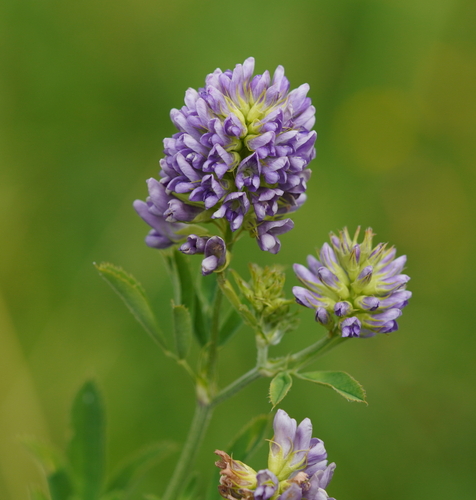
Alfalfa
Medicago sativa
The 'Queen of Forages,' Alfalfa is more than just a crop; it is a nitrogen-fixing engine that fuels backyard biodiversity. With its deep purple blooms and incredible drought resistance, it provides a vital nectar bar for pollinators and a high-protein feast for local mammals.
Quick Identification
Size
Stands 30–90 cm (1–3 ft) tall with a deep taproot that can reach over 15 m (50 ft) in search of water.
Colors
Deep green foliage; flower clusters range from pale lavender to vibrant royal purple, occasionally appearing yellow or white in some varieties.
Key Features
- Trifoliate leaves with leaflets serrated only at the tips
- Dense racemes of small, pea-like purple flowers
- Spiral-shaped seed pods containing small kidney-shaped seeds
- Erect, multi-stemmed growth habit arising from a woody crown
When You’ll See Them
Geographic range
Where Does the Alfalfa Live?
Alfalfa originally hails from the temperate regions of South-central Asia, specifically around ancient Persia. Since its discovery as a high-protein forage crop, it has been introduced to every continent except Antarctica, becoming a naturalized resident across the United States, Canada, and much of Europe. In North America, it is particularly ubiquitous throughout the Midwest and Western states, where it thrives in the sun-drenched plains and valleys.
Basemap © OpenStreetMap contributors
Behavior
Alfalfa is a powerhouse of the legume family, known primarily for its incredible resilience and its role as a nitrogen-fixer. It lives in a symbiotic relationship with soil bacteria called rhizobia, which allow the plant to pull nitrogen from the air and deposit it into the soil, essentially fertilizing itself and the plants around it. This makes it a foundational species in many backyard ecosystems, improving soil health for neighboring flora.
In a backyard setting, Alfalfa acts as a bustling hub for local wildlife. While it doesn't 'behave' in the animal sense, it follows a rigorous growth cycle that responds to light and moisture. It is a perennial, meaning it returns year after year from its deep woody crown. It is famously drought-tolerant due to its massive root system, allowing it to stay green and provide cover even when other grasses have turned brown and dormant.
EverydayEarth exclusive
Camera Tips
When setting up an AI-powered camera to monitor Alfalfa, your primary goal isn't just to see the plant grow, but to capture the incredible diversity of 'microwildlife' it attracts. Place your camera on a macro setting or use a close-focus lens about 12-18 inches from a cluster of flowering stems. Because Alfalfa is a preferred nectar source for butterflies like the Sulphurs and Blues, as well as various leafcutter bees, the best time for recording is during the brightest, warmest part of the day.
For larger backyard visitors, Alfalfa serves as a 'bait plant.' Deer, rabbits, and groundhogs find the high-protein leaves irresistible. Position your trail camera 2-3 feet off the ground, angled slightly downward toward a patch of Alfalfa. If you are looking to capture nocturnal mammals, ensure your camera's infrared flash is active, as Alfalfa patches are frequent midnight snack spots for herbivores.
Consider using a time-lapse mode to document the plant's 'sleep movements' (nyctinasty), where the leaflets fold together at night and open during the day. This provides a fascinating look at plant behavior that is often missed by the naked eye. In windy conditions, increase your shutter speed to at least 1/500th of a second to prevent the swaying purple flowers from blurring into a purple haze.
Similar Species
Species that look similar or are commonly confused with Alfalfa.
Frequently Asked Questions
Record Alfalfa at your habitat
Connect a camera to start building your own species record — AI identifies every visitor automatically.