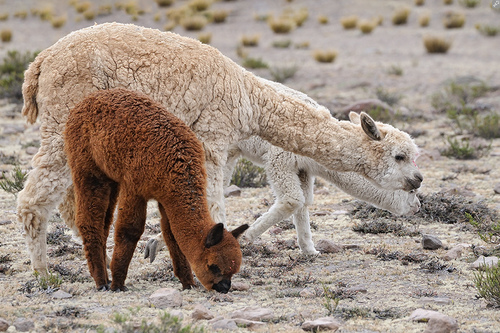
Alpaca
Lama pacos
The alpaca is the smaller, fluffier cousin of the llama, prized for its incredibly soft fleece and gentle nature. Originating from the misty peaks of the Andes, these social camelids are now a common and charismatic sight on farms around the world.
Quick Identification
Size
Shoulder height: 81–99 cm (32–39 in); Weight: 48–84 kg (106–185 lbs)
Colors
Available in 22 natural shades including white, fawn, brown, grey, and black; fleece is usually uniform in color but can be spotted.
Key Features
- Small, spear-shaped ears that stand upright
- Short, blunt snout with a cleft upper lip
- Thick, wooly fleece covering the entire body and head
- Slender build with a long neck and padded, two-toed feet
When You’ll See Them
Geographic range
Where Does the Alpaca Live?
The alpaca is native to the high-altitude Altiplano of the South American Andes, with the largest populations residing in Southern Peru and Western Bolivia. They are also found in the high-elevation regions of Northern Chile and Ecuador, where they have lived alongside indigenous cultures for thousands of years. Beyond their native mountains, alpacas have become a global species due to their popularity in agriculture; they now thrive in extensive farmed populations across the United States, Canada, Australia, and the United Kingdom.
Basemap © OpenStreetMap contributors
Behavior
One of their most fascinating behaviors is the use of communal dung piles. Instead of grazing where they waste, alpacas will all use the same specific locations to defecate, which helps prevent the spread of internal parasites and keeps their grazing areas clean. They are generally gentle and inquisitive toward humans but may spit a foul-smelling mix of stomach contents if they feel threatened, cornered, or are competing for high-value food.
EverydayEarth exclusive
Camera Tips
To capture the best footage of alpacas, position your camera near their communal dung piles or water troughs. Because alpacas are creatures of habit, they will visit these specific 'poop piles' multiple times a day, providing a predictable spot for high-quality shots. Mounting the camera at about 3 feet (1 meter) off the ground is ideal for capturing their expressive facial features and spear-shaped ears at eye level.
Use a wide-angle lens setting if your camera supports it. Alpacas are rarely alone, and a wider field of view allows you to capture the social interactions of the entire herd rather than just a single individual. If you are placing a camera in a fenced pasture, avoid attaching it directly to a fence post that the alpacas use as a scratching post, as the constant vibration will trigger the sensor or result in blurry, unusable footage.
Lighting is a major factor when filming alpacas. Their thick fleece can be highly reflective, especially in white or light-fawn individuals. During the night, standard infrared flashes can 'blow out' the image, leaving you with a glowing white silhouette. To counter this, place the camera at a 45-degree angle to their expected path rather than head-on, or reduce the IR flash intensity in your settings. The golden hours of early morning and late afternoon provide the most dramatic lighting to showcase the texture of their fiber.
Similar Species
Species that look similar or are commonly confused with Alpaca.
Frequently Asked Questions
Record Alpaca at your habitat
Connect a camera to start building your own species record — AI identifies every visitor automatically.