Alpine Galaxias
Galaxias paucispondylus
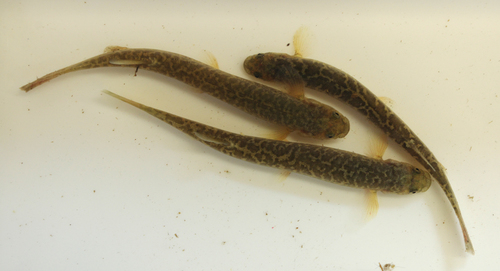
A slender ghost of the Southern Alps, the Alpine Galaxias is a resilient survivor of New Zealand's coldest, highest streams. Perfectly camouflaged against river gravel, these non-migratory fish are masters of the high-country riffle.
Quick Identification
Size
Up to 11 cm (4.3 inches) in length; slender, pencil-like body shape
Colors
Pale creamy-gold to olive-brown base with fine dark 'peppery' speckling along the back and sides; translucent fins
Key Features
- Slender, elongated body
- Small head with rounded snout
- Fins set far back near the tail
- Lack of scales with a smooth, leathery skin
When You’ll See Them
Geographic range
Where Does the Alpine Galaxias Live?
Native to the island of New Zealand, the Alpine Galaxias is found exclusively in the South Island. It inhabits the mid-to-high elevation river systems flowing from the Southern Alps, with significant populations in the Canterbury, Otago, and Southland regions. This species is a true specialist of the high country, typically found in inland waters far from the coastal influence.
Basemap © OpenStreetMap contributors
Behavior
The Alpine Galaxias is a highly specialized, non-migratory fish that spends its entire life cycle in the cold, turbulent waters of high-elevation streams. Unlike many other galaxiid species that travel to the ocean, this hardy fish is a 'mountain resident,' evolved to withstand the freezing temperatures and high-velocity flows of the Southern Alps. They are primarily benthic, meaning they live on the bottom of the stream, often wedging themselves into the interstitial spaces between cobbles and gravel to avoid being swept away.
These fish are generally solitary and extremely cryptic. They rely on their mottled, peppery coloration to remain invisible to predators like birds and introduced trout. While they are not overly aggressive, they are territorial regarding their favorite 'hiding' stones. Their interactions with humans are rare due to the remoteness of their habitat, but they serve as an important indicator of water quality in New Zealand's pristine alpine ecosystems.
EverydayEarth exclusive
Camera Tips
Capturing the Alpine Galaxias on camera requires an underwater setup, as these fish almost never break the surface. Use a waterproof action camera or a specialized underwater trail camera capable of high-definition recording. The best placement is on the bed of a shallow, clear riffle or at the edge of a mountain pool where the water movement is steady but not violent. Secure your camera to a heavy diving weight or a flat river stone using zip-ties or a specialized mount to ensure it doesn't wash away.
Position the lens at a low, horizontal angle to capture the 'creeping' movement of the fish along the gravel. Galaxias move with a distinctive sinuous, eel-like motion that is best captured from the side. Because these fish are sensitive to light, avoid using high-intensity white LEDs at night; instead, look for cameras with 'no-glow' infrared or plan your recording for the 'golden hours' of dawn and dusk when they are naturally most active in the ambient light.
To increase your chances of a sighting, place your camera near 'structure'—specifically large, flat stones with gaps underneath. These are the preferred hiding spots for the Alpine Galaxias. You don't need artificial bait; the natural drift of the stream often brings food directly past these spots. Be sure to check the weather forecast before deploying; mountain streams can rise rapidly, and a small creek can become a raging river in hours, potentially burying your equipment in silt or washing it downstream.
Similar Species
Species that look similar or are commonly confused with Alpine Galaxias.
Frequently Asked Questions
Record Alpine Galaxias at your habitat
Connect a camera to start building your own species record — AI identifies every visitor automatically.