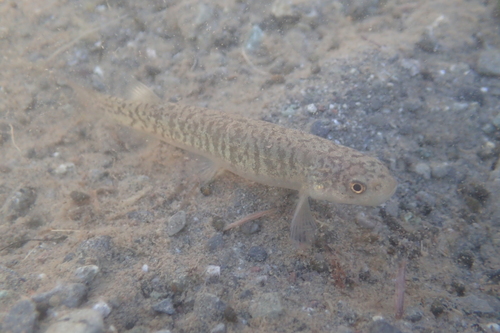
Canterbury Galaxias
Galaxias vulgaris
A cryptic resident of New Zealand's braided rivers, the Canterbury Galaxias is a master of camouflage that never ventures to the sea. This hardy, scaleless fish thrives in the cold, stony streams of the South Island.
Quick Identification
Size
Typically 100-150 mm (4-6 inches) in length, occasionally reaching up to 190 mm (7.5 inches).
Colors
Olive-brown or greyish base with intricate dark brown mottling and 'pepper-pot' spotting; often displays shimmering gold or silvery flecks along the sides.
Key Features
- Smooth, scaleless skin with a leathery texture
- Single dorsal fin positioned far back on the body, directly above the anal fin
- Blunt, rounded snout with a wide mouth
- Cryptic camouflage pattern that blends perfectly with riverbed stones
When You’ll See Them
Geographic range
Where Does the Canterbury Galaxias Live?
The Canterbury Galaxias is a proud New Zealand endemic, found exclusively on the South Island. It is a specialist of the eastern rain-shadow regions, with its core populations residing in the braided river systems and foothill streams of Canterbury and North Otago. From the Waimakariri River in the north down through the Rakaia and Rangitata, to the upper reaches of the Waitaki and Clutha catchments, this fish is a true icon of the Canterbury Plains' freshwater networks.
Basemap © OpenStreetMap contributors
Behavior
The Canterbury Galaxias is a master of disguise, spending much of its life hugging the bottom of stony riverbeds. Unlike many of its cousins in the whitebait family, this species is non-migratory, meaning it spends its entire life cycle within the same river system rather than heading out to sea. It is a benthic specialist, using its stocky body to navigate the turbulent boundary layer of water near the rocks.
While they are primarily nocturnal hunters, they can be observed during the day in well-shaded or deep sections of a stream. They are generally solitary and territorial over specific 'homes' under large cobbles. When threatened, they don't swim long distances; instead, they dart rapidly into the nearest crevice between stones, relying on their mottled coloration to vanish from sight.
EverydayEarth exclusive
Camera Tips
Capturing the Canterbury Galaxias requires an underwater approach, as their mottled patterns are designed to be invisible from above the surface. If you have a backyard stream, use a waterproof action camera or a trail camera inside a specialized underwater housing. Position the camera at a low angle, nearly touching the gravel, and face it toward a 'flat' area of the riverbed just downstream from a riffle where oxygen levels are high.
Because these fish are most active under the cover of darkness, you will need a camera with excellent infrared (IR) capabilities or an external underwater light source. Avoid using bright white lights as they can startle the fish; instead, use a dim red light or low-glow IR. If your camera allows for time-lapse or motion trigger, set it for high sensitivity, as their movements can be quick 'darts' followed by long periods of stillness.
To encourage them to appear in front of the lens, look for a large, flat stable rock (a 'home' rock) and place the camera about 30-50 cm away from the downstream crevice. You don't need bait—they are naturally curious about changes in their environment—but ensuring the water is clear and the current isn't shaking the camera mount is essential for a sharp image.
Similar Species
Species that look similar or are commonly confused with Canterbury Galaxias.
Frequently Asked Questions
Record Canterbury Galaxias at your habitat
Connect a camera to start building your own species record — AI identifies every visitor automatically.