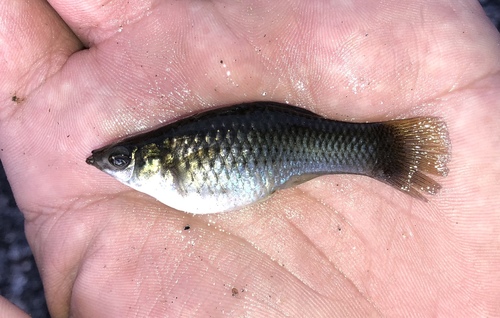
Amazon Molly
Poecilia formosa
Meet the Amazon molly, the world’s first-discovered asexual vertebrate. This all-female species uses a unique form of cloning to thrive in the sun-drenched waters of the Texas-Mexico border.
Quick Identification
Size
5 to 10 cm (2 to 4 inches) in length; weighs approximately 5 to 15 grams
Colors
Silvery-gray to olive-green scales with rows of small, dark bronze or black spots along the flanks; fins are usually translucent or faintly mottled
Key Features
- Distinctly upturned, terminal mouth for surface feeding
- Compact, stocky body with a rounded tail fin
- Absence of bright male coloration or elongated dorsal fins
- Visible rows of dark speckles on the sides
When You’ll See Them
Geographic range
Where Does the Amazon Molly Live?
Native to the North American continent, the Amazon molly is primarily found in the warm, subtropical waters of the Rio Grande drainage system. Its core range extends from the southern tip of Texas in the United States down through the coastal plains of northeastern Mexico to the Tuxpan River. While its natural range is relatively narrow, this resilient species has established introduced populations in various warm-water habitats across the American Southwest, particularly in areas with consistent thermal springs.
Basemap © OpenStreetMap contributors
Behavior
The Amazon molly is a highly social species that travels in schools, though its social structure is one of the most unusual in the animal kingdom. Because the species consists entirely of females, they do not form traditional mating pairs. Instead, they school alongside closely related species like the sailfin molly or Atlantic molly. They exhibit a behavior called gynogenesis, where they mate with males of these other species to trigger egg development, though the male's DNA is never actually used, resulting in offspring that are genetic clones of the mother.
These fish are active and inquisitive, spending most of their daylight hours swimming in the middle to upper layers of the water column. They are relatively bold and will frequently approach the water's surface to investigate potential food sources. In a backyard pond or stream setting, they are peaceful toward other species and contribute significantly to the ecosystem by keeping algae growth in check and serving as a food source for larger aquatic predators.
EverydayEarth exclusive
Camera Tips
To capture the Amazon molly on camera, you will need a waterproof action camera or a trail camera with an underwater housing. The best results come from placing the camera in shallow, clear water near the edges of a stream or pond where submerged vegetation is present. Angle the camera horizontally to capture the side profile of the fish, which highlights their characteristic spotting and body shape; top-down shots from above the water are often ruined by glare and surface ripples.
Baiting is an excellent strategy to bring these fish into your camera’s field of view. Use a small mesh feeder bag or a weighted stone smeared with algae paste or crushed fish flakes. Amazon mollies are naturally curious and will quickly swarm a food source, providing excellent group shots. For the best lighting, aim to record during the middle of the day when the sun is directly overhead, as this allows light to penetrate the water and reveal the subtle iridescence of their scales.
Since standard PIR motion sensors often fail to detect movement through water, use a 'time-lapse' setting on your trail camera, taking a photo every 15 to 30 seconds. Alternatively, set an action camera to record short video clips at 60fps, which will allow you to slow down the footage later and see the fast, jerky movements of the mollies as they forage. Ensure your camera is tethered or weighted down, as even slow currents can move a lightweight housing out of position.
Similar Species
Species that look similar or are commonly confused with Amazon Molly.
Frequently Asked Questions
Record Amazon Molly at your habitat
Connect a camera to start building your own species record — AI identifies every visitor automatically.